en.Wedoany.com Reported - Russian scientists have discovered a new mineral named Petrovita in a volcanic crater on the Kamchatka Peninsula, whose crystal structure features sodium-ion channels considered potentially valuable for next-generation battery technology. The research findings on this mineral have been published in the Mineralogical Magazine, and its unique atomic configuration has quickly attracted attention in the field of materials science.
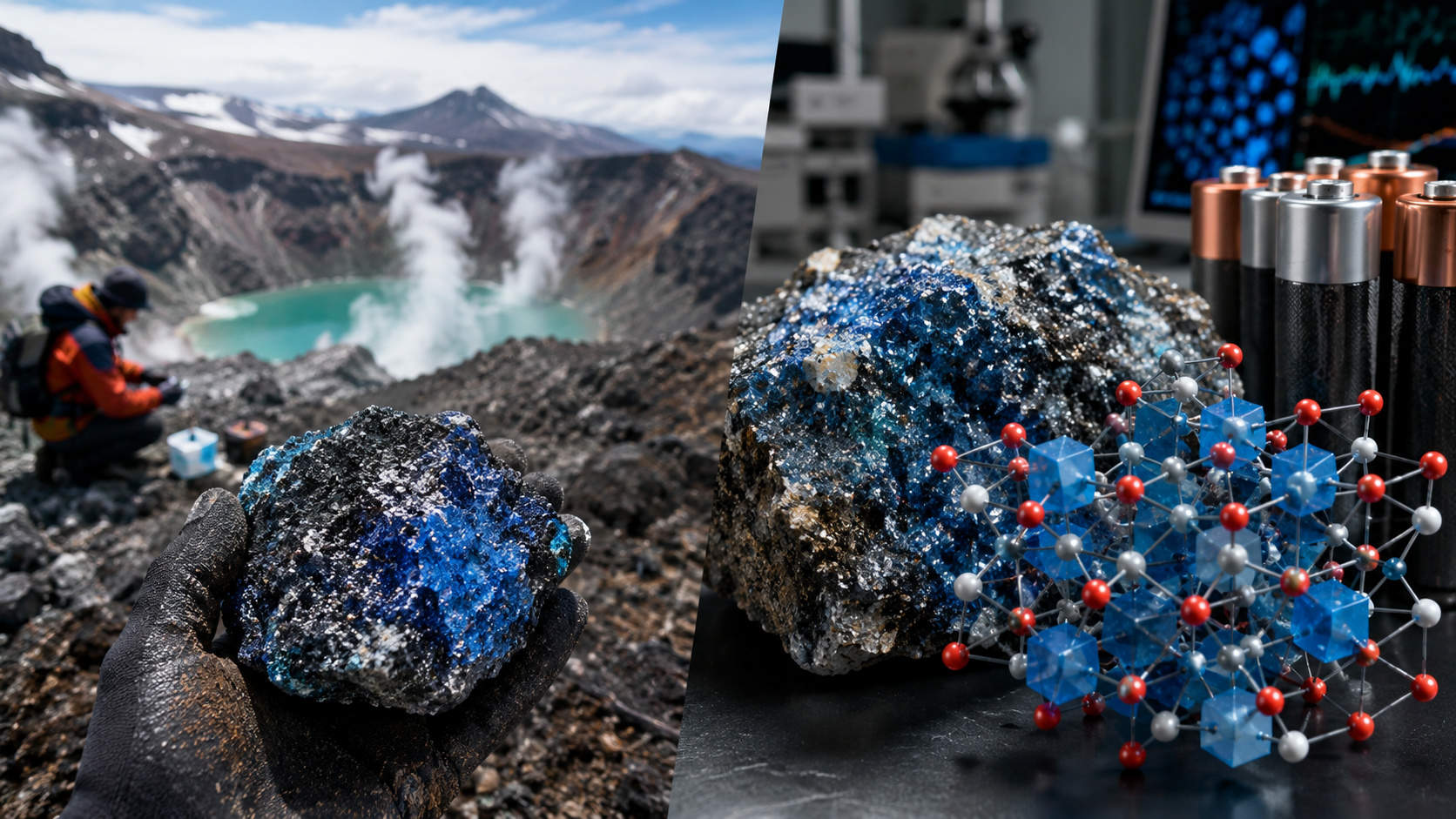
Professor Stanislav Filatov from the Department of Crystallography at Saint Petersburg State University has spent over 40 years studying volcanic scoria cones and lava flow fumaroles on the Kamchatka Peninsula. These geological formations resulted from two major eruptions of the Tolbachik volcano in 1975–1976 and 2012–2013. The region boasts unique mineral diversity, with dozens of new minerals discovered in recent years, many of which are exclusive to the area, and Petrovita is one of them.
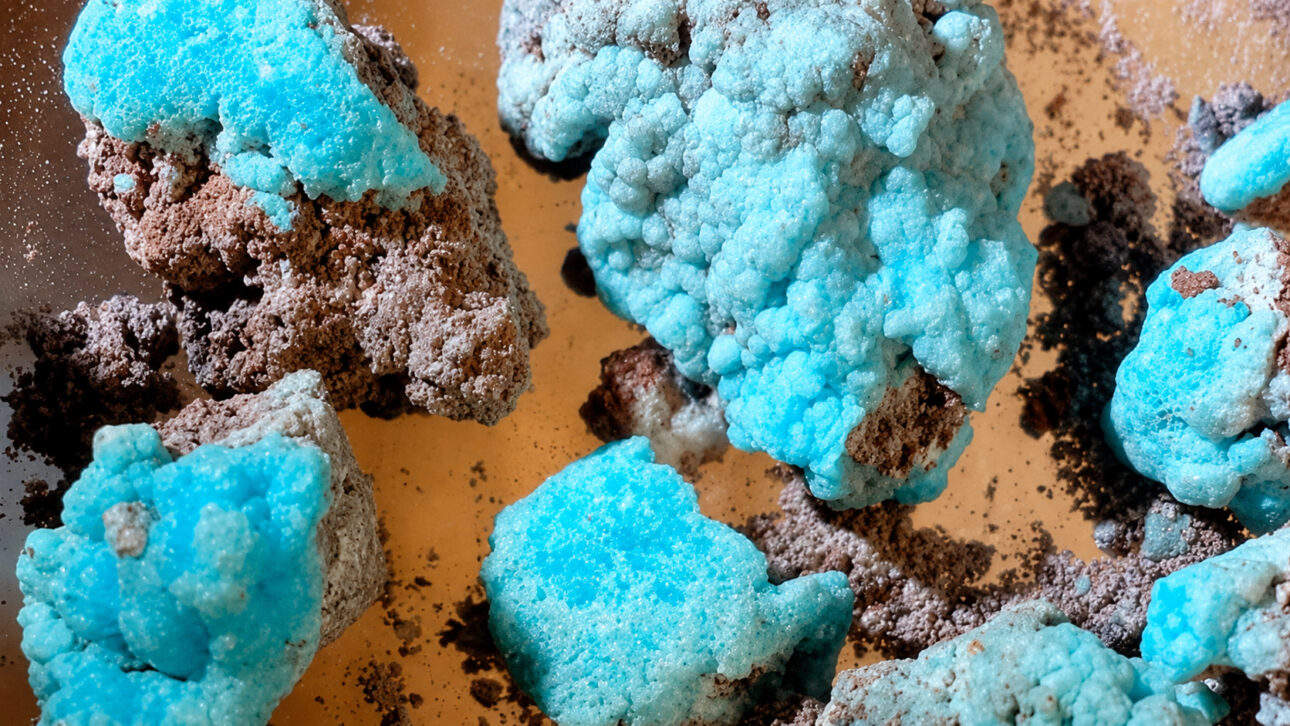
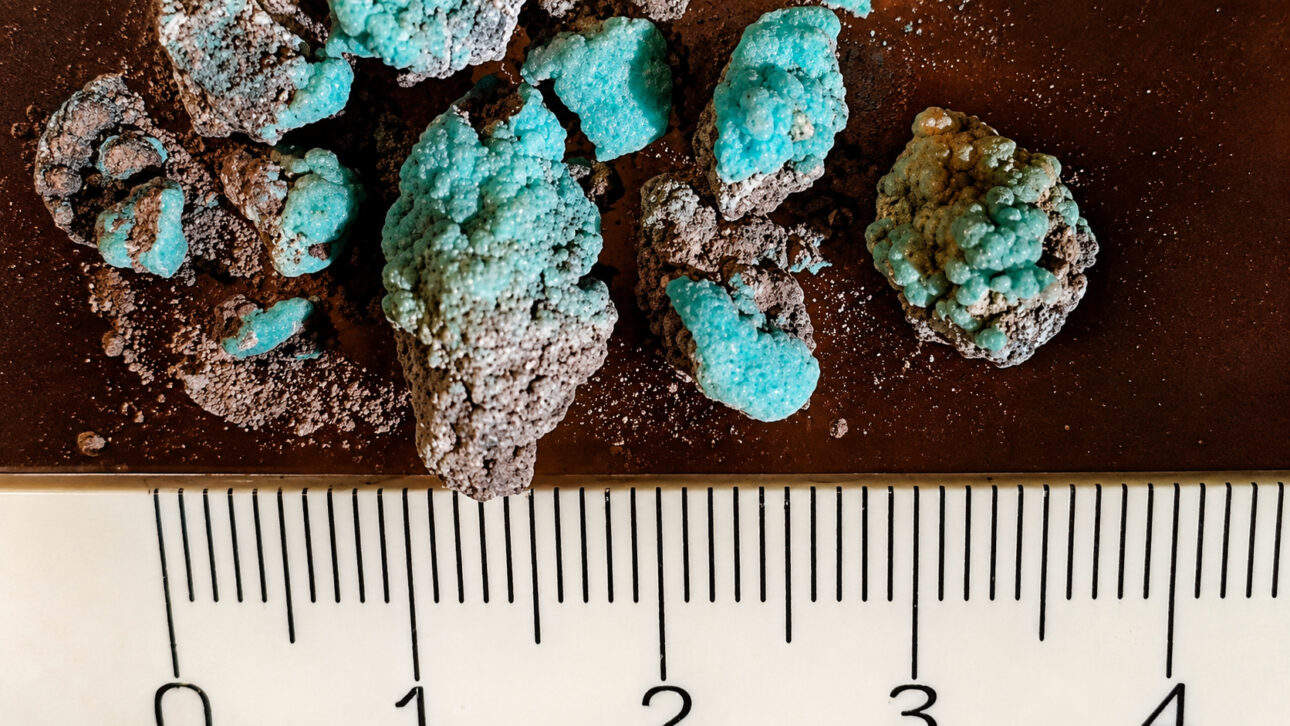
Petrovita has the chemical formula Na10CaCu2(SO4)8 and appears as blue spherical aggregates composed of tabular crystals containing gas-liquid inclusions. Its composition was determined by Svetlana Moskaleva from the Institute of Volcanology and Seismology, Far Eastern Branch of the Russian Academy of Sciences. The crystal structure was studied by Andrey Shablinskii (a graduate of Saint Petersburg State University) from the Grebenshchikov Institute of Silicate Chemistry. The mineral is named after Tomas Petrov, a crystallographer at Saint Petersburg State University, who was the first in the world to develop a technique for cultivating jewelry-grade malachite.
The reason Petrovita immediately sparked interest among battery researchers is the extremely rare seven-coordinate oxygen configuration of copper atoms in its crystal structure. This configuration is found in only a few compounds. Petrovita consists of a three-dimensional porous framework built from oxygen, sodium, sulfur, and copper atoms, with voids in the framework interconnected by channels through which relatively small sodium atoms can move.
Scientists believe that the ionic mobility of sodium atoms moving through the crystal channels holds potential value for battery technology. Battery operation relies on the movement of ions between electrodes; the easier the ion movement, the higher the battery efficiency. Petrovita's structure precisely creates the conditions that battery engineers attempt to artificially replicate in the laboratory: well-defined channels, pore sizes suitable for sodium ions, and a stable framework that does not collapse during ion movement. Filatov stated that Petrovita's structure type is promising for ionic conductivity and could be used as a cathode material for sodium-ion batteries.
The discovery of Petrovita as a natural mineral does not mean it can be directly mined for use in batteries; the low copper content in its crystal structure is a core obstacle. Copper is the transition metal in the chemical formula that participates in electrochemical reactions to enable battery energy storage and release. To make this material efficient as a battery cathode, the proportion of copper needs to be increased. Filatov noted that this can be addressed by synthesizing compounds with the same structure as Petrovita in the laboratory. Researchers propose using Petrovita's crystal structure as a model to replicate and optimize the ratios of various elements in the lab.
The context in which Petrovita appears is crucial for understanding its strategic significance. Lithium-ion batteries dominate the current energy storage market, but lithium resources are geographically concentrated, with most reserves in South America and processing dominated by China. Sodium is the sixth most abundant element in the Earth's crust, is nearly ubiquitous, inexpensive, and lacks the geopolitical concentration of lithium. If sodium-ion batteries achieve performance comparable to lithium batteries, the entire energy storage chain's dependence on a single strategic metal could be significantly reduced. The obstacle for sodium-ion batteries lies in finding efficient cathode materials, as sodium ions are larger than lithium ions, requiring larger channels in the electrode material. Petrovita's channel size is precisely suitable for sodium ions, making it a natural model for constructing such structures.
Petrovita is not the only new mineral discovered in the Tolbachik region. Filatov's team also found Saranchinaita in the same volcanic group, a mineral structurally related to Petrovita, possibly a product of reactions involving saranchinaite, calcium sulfate, and sodium sulfate. One hypothesis for Petrovita's formation is the gradual replacement of nickel-bearing minerals by metal-rich hydrothermal fluids, a mechanism that describes formation processes occurring within temperature and pressure ranges replicable in the laboratory. For materials science, these discoveries provide architectural blueprints tested by nature over millions of years, long before any engineer attempted to construct similar structures.
This article is compiled by Wedoany. All AI citations must indicate the source as "Wedoany". If there is any infringement or other issues, please notify us promptly, and we will modify or delete it accordingly. Email: news@wedoany.com