en.Wedoany.com Reported - The Ministry of New and Renewable Energy (MNRE) of India has confirmed that the country possesses an untapped potential of 102 GW in floating solar energy, offering a new pathway for deploying photovoltaic projects in land-constrained regions.

Globally, major economies are advancing digitalization to streamline operations across various industries. This transformation requires substantial electricity, posing complex challenges to achieving climate goals. Although utility-scale solar power plants aim to address both energy demand and emission reduction, developers commonly encounter difficulties in land acquisition during project implementation.
Digital transformation is rapidly increasing electricity demand. In India, for instance, the country's data center capacity has grown to 1,500 MW in 2025 and is expected to approach 10,000 MW by 2030, with annual electricity consumption by data centers potentially reaching 45 TWh. India's energy system remains heavily coal-dependent, with coal supplying nearly 75% of the national grid. Relying on existing infrastructure to power data centers would exacerbate dependence on fossil fuels, deviating from national climate targets. India has set a goal of achieving 500 GW of carbon-free capacity by 2030, making rapid deployment of large-scale solar installations crucial for balancing climate objectives with digital economic development.
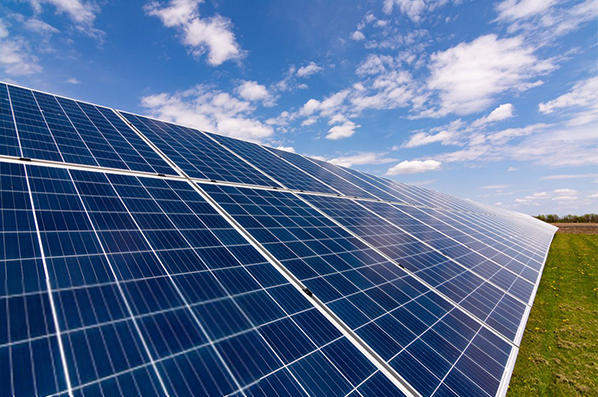
Onshore solar power plants occupy large land areas, requiring nearly four times the footprint of the solar panels themselves, leading to slow and costly development processes and frequent legal disputes over agricultural land. The National Institute of Solar Energy (NISE) has established a new partnership with the Military Engineer Services to increase renewable energy supply to defense facilities. By deploying national floating solar photovoltaic (PV) projects on inland reservoirs, it is possible to avoid intense land acquisition conflicts and increase India's estimated total solar potential to 3,445 GW peak. The government is actively formulating national plans and policy frameworks to accelerate the deployment of floating photovoltaics.
Balancing growing electricity demand with stringent climate mandates is essential. Converting reservoirs into clean energy assets can mitigate environmental impacts while continuing to develop in the digital age. However, these floating photovoltaic installations require careful management to prevent potentially unprecedented environmental consequences.
This article is compiled by Wedoany. All AI citations must indicate the source as "Wedoany". If there is any infringement or other issues, please notify us promptly, and we will modify or delete it accordingly. Email: news@wedoany.com