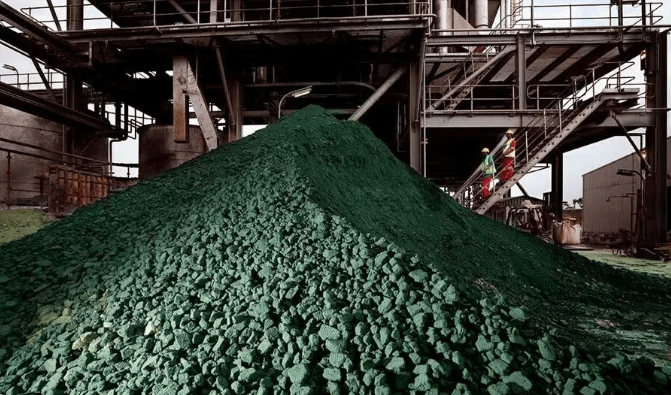
en.Wedoany.com Reported - Guinea, the world's largest bauxite producer, announced in late May 2026 that it plans to officially launch a bauxite export control policy in June. Guinea's Minister of Mines and Geology, Bouna Sylla, publicly stated that the government aims to push prices back to reasonable levels by regulating export volumes. The market generally predicts that the total cap on Guinea's bauxite exports in 2026 will be set at 150 million tons, a reduction of approximately 33 million tons from 183 million tons in 2025, a decrease of 18%. The Guinean government is seeking to emulate Indonesia's resource control model in the nickel industry, combining export quotas with production limits to curb unchecked expansion and enhance resource bargaining power.
Guinea is the world's largest bauxite producer, accounting for about 70% of global seaborne trade and roughly 40% of total global output. In 2025, the country's bauxite exports increased by 25% year-on-year to 183 million tons. However, rapid production expansion has led to a sharp price decline—bauxite FOB prices have fallen from over $70 per ton more than a year ago to a range of $32 to $38 per ton, a drop of nearly 50%. Many small and medium-sized mining enterprises are under operational pressure, with some approaching or falling below the breakeven point, and the Guinean government's fiscal revenue has also been significantly affected. As of mid-June 2026, the export control policy has not yet been formally implemented, but the voluntary reduction in mine shipments has already become a reality—according to industry estimates, shipments from 19 mining companies in Guinea in June amounted to approximately 16 million wet metric tons, a decrease of about 5 million tons from the peak in March.
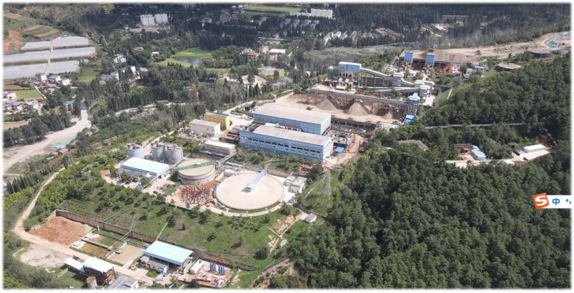
The Guinean government's goal is to shift from "selling ore" to "selling processed products," i.e., completing the primary processing of bauxite into alumina domestically to increase added value. In May 2026, Aluminum Corporation of China Limited (abbreviated as "Chalco," 601600.SH) signed an agreement with the Guinean government to invest approximately $1 billion in building a production line with an annual capacity of 1.2 million tons of alumina. The Guinean government plans to build 5 to 6 alumina plants by 2030, bringing the country's total alumina production capacity to about 7 million tons. Currently, Guinea has only one Friguia alumina plant with limited capacity. The government has previously taken asset recovery measures against foreign companies that failed to fulfill their processing commitments, demonstrating its determination to promote local processing.
China is the world's largest importer of bauxite. In 2025, China imported a total of 201 million tons of bauxite, of which 149 million tons came from Guinea, accounting for 74%. In the first four months of 2026, China imported 62.964 million tons of bauxite from Guinea, representing 81% of total imports during the same period. Although Guinea's export control policy has not yet been formally implemented, the market has already reacted in advance—domestic alumina futures prices have broken through the 2,800 yuan per ton mark, and the A-share non-ferrous aluminum sector has strengthened across the board.
Guinea's resource control strategy is expanding across Africa. Nigeria has signed a $1.3 billion alumina project, and Ghana is also advancing similar plans, indicating that Africa as a whole is moving upstream in the aluminum industry chain. However, the strategy still faces key constraints: Guinea's insufficient power infrastructure limits its ability to further extend into electrolytic aluminum production. The global seaborne bauxite market may gradually shrink, while alumina trade is expected to expand. Guinea is attempting to replicate Indonesia's successful path in the nickel market, reshaping the global aluminum supply chain through resource control and industrial upgrading.
This article is compiled by Wedoany. All AI citations must indicate the source as "Wedoany". If there is any infringement or other issues, please notify us promptly, and we will modify or delete it accordingly. Email: news@wedoany.com