en.Wedoany.com Reported - Although global uranium resources are sufficient to meet long-term demand projections, the supply side still faces mining and processing bottlenecks. Expanding production capacity will require more flexible small and medium-sized exploration companies, while geopolitical factors continue to disrupt the highly concentrated nuclear fuel cycle chain. The uranium conversion segment is primarily controlled by Rosatom (Russia), Orano (France), and the British-Dutch-German joint venture Urenco along with its U.S. subsidiary.
Currently, primary production from mines, conversion facilities, and enrichment plants remains the main supply source for global nuclear reactors. As existing deposits face resource depletion by the mid-2030s, the need for new uranium supplies is expected to become more urgent. The World Nuclear Association told Stockhead that under current policy settings, global reactor uranium demand is estimated at 68,920 tonnes in 2025 and is projected to double to over 150,000 tonnes by 2040. In a higher scenario, as more countries incorporate nuclear energy into their future energy mix, this figure could exceed 204,000 tonnes by 2040.
On the policy front, the Swedish parliament ended a ban on uranium mining in January, simplifying the licensing process for uranium extraction and processing. The policy will take effect in mid-July, when uranium mining will no longer be classified as a nuclear facility, aligning it with other metal and mineral mining. This change is a positive signal for Aura Energy's (ASX:AEE) Häggån deposit, which holds 800 million pounds of uranium, making it one of the world's largest undeveloped uranium resources. The Geological Survey of Sweden has designated Häggån as a deposit of national interest. Additionally, Aura Energy has signed a Memorandum of Understanding (MoU) with an international nuclear power company to advance the final investment decision for its Tiris uranium project in Mauritania. The MoU covers potential investment, uranium offtake, and technical cooperation, providing a pathway to a well-funded strategic partner. Elsewhere, Atomic Eagle (ASX:AEU) has cleared environmental and social impact hurdles for the Muntanga uranium project in Zambia. QX Resources (ASX:QXR) holds the Madaba shallow uranium project in the Luwegu Basin, Tanzania. Alligator Energy (ASX:AGE) increased uranium resources at its Samphire project in South Australia by 67% to 30 million pounds of U3O8 after completing the first resource estimate for the Plumbush deposit.
Canada has launched a new nuclear energy strategy, emphasizing nuclear power's critical role in driving the nation's future. The government plans to build on existing foundations, including sovereign reactor technology, world-class uranium deposits in Saskatchewan, and the nuclear workforce and supply chain. Energy and Natural Resources Minister Tim Hodgson stated that Canada is advancing nuclear power construction at a pace not seen in generations. A group of Australian-backed exploration companies, including Terra Critical Minerals (ASX:T92), Infini Resources (ASX:I88), and Cosa Resources (CSE:COSA), are already operating in Canada. Paladin Energy (ASX:PDN), known for the Langer Heinrich uranium mine in Namibia, discovered the high-grade Atlas deposit during the 2026 winter drilling program at Patterson Lake South in Saskatchewan. Earlier this year, Canada approved its first commercial in-situ recovery uranium mine, Phoenix, part of the Wheeler River project operated by Denison Mines (TSX:DML). Construction began in March, targeting first commercial production by mid-2028. Denison President and CEO David Cates called it the first major new uranium mine in Canada in over two decades.
In the United States, nuclear power accounts for about one-fifth of electricity generation, and the government aims to quadruple nuclear capacity by 2050. U.S. Deputy Secretary of State Thomas DiNanno stated that without nuclear power, the world cannot power industry, meet artificial intelligence demands, or secure its energy future. With the 2024 ban on Russian-related imports, domestic production and exploration are accelerating. In November 2025, uranium was officially re-listed on the U.S. Geological Survey's (USGS) critical minerals list, alongside the addition of boron, used in control rods to stabilize reactor cores. However, the U.S. has no operating commercial-scale high-assay low-enriched uranium enrichment facility, the type of nuclear fuel required for advanced small modular reactors (SMRs). Although the U.S. is the world's largest uranium consumer, its domestic production meets less than 1% of commercial demand. Peninsula Energy (ASX:PEN) is working to restart commercial production at its Lance uranium project in Wyoming, which has JORC-compliant resources of 20,700 tonnes of uranium at a grade of 0.04%, including 6,080 tonnes in measured and indicated resources. American Uranium (ASX:AMU) is advancing a scoping study and resource upgrade for the Lo Herma project in Wyoming, planned for completion this year. Laramide Resources (ASX:LAM), in which Boss Energy (ASX:BOE) holds a stake, owns in-situ recovery (ISR) and hard rock assets in Utah and New Mexico. Anson Resources (ASX:ASN) has high hopes for the Yellow Cat project in Utah, with rock sample analysis showing uranium grades up to 10.33% and vanadium grades up to 25.6%.
From a price signal perspective, uranium prices plunged over 70% after the 2011 Fukushima nuclear accident, stabilizing at around $20 per pound between 2016 and 2017. As contracts expired, many producers suspended or scaled back operations. But the outlook has rapidly changed. According to Trading Economics, U.S. uranium futures, after breaking $100 per pound in January, were around $85 per pound in June. The World Nuclear Association noted that uranium production is responding to more favorable market signals, including project restarts, life extensions, and increased exploration spending. Major producers like Canada's Cameco have demanded minimum prices of $90 per pound and maximum prices of $160 per pound in supply contracts. The all-time record for spot uranium was $148 per pound in May 2007.
Despite supply challenges, the demand outlook is certain. Nuclear energy is accelerating its recovery. According to the International Energy Agency (IEA), over 40 countries are seeing investment growth, technological advances, and supportive policies. The latest Global Energy Review shows that the capacity of nuclear reactors under construction is at one of the highest levels in the past 30 years. As of the end of 2025, global nuclear capacity stood at 420 gigawatts (GW), with reactors operating in over 30 countries. Ten reactors began construction in 2025, nine in China and one in Russia, with a total capacity of 12.2 GW. Half of the global capacity under construction is in China, where total installed capacity is expected to reach 100 GW around 2030. Japan is also actively restarting reactors to reduce reliance on imported natural gas and meet data center electricity demand, aiming for nuclear power to provide one-fifth of its electricity by 2040. Of Japan's 33 operable reactors, 15 have resumed operation, including Unit 6 at the Kashiwazaki-Kariwa nuclear plant in Niigata Prefecture, the country's largest.
The explosive growth of AI-driven data centers is further boosting demand for low-carbon electricity. Goldman Sachs Research shows that nuclear power, natural gas, renewables, and battery technologies can all power data centers. Major U.S. tech companies have signed contracts for new nuclear capacity, with data center electricity consumption expected to double by 2030. According to Goldman Sachs, approximately 85-90 GW of new nuclear capacity would be needed to meet the entire projected growth in data center electricity demand by 2030. Recent nuclear contracts and signs of increased interest from various countries indicate that investment will rise significantly over the next five years.
At the 2023 international climate negotiations, major countries agreed to triple global nuclear capacity by 2050. Key nuclear nations, including China, France, India, Russia, and the United States, are expected to account for nearly 980 gigawatts-electric (GWe) of capacity by 2050. A coalition led by companies such as Google, Meta, and Amazon, along with 38 countries, pledged support. Since then, Belgium, Brazil, China, and Italy have also endorsed the declaration. World Nuclear Association Director General Sama Bilbao y León stated that if government targets are met, nuclear capacity could exceed the tripling goal, and governments and industry need to turn ambition into action and deliver results.
The nuclear landscape is changing, but Russia still holds cards in nuclear technology. IEA Executive Director Fatih Birol noted that over 99% of enrichment capacity is concentrated in four supplier countries, with Russia accounting for 40% of global enrichment capacity, the largest single share. The high concentration of nuclear technology and uranium production and enrichment poses future risks, highlighting the need for supply chain diversification. According to the IEA, nearly all nuclear reactors currently under construction are large, with most capacities exceeding 1,000 megawatts (MW). Nuclear capacity growth in China and India is expected to increase significantly, with over half of the anticipated new reactors located in these two countries. China also operates a land-based small modular reactor, and Russia operates a floating small modular reactor. According to the USGS, Kazakhstan, Canada, Namibia, Australia, Uzbekistan, Russia, China, and Niger are the world's largest uranium-producing countries. However, Australia holds the largest uranium resource reserves, accounting for 24% of the global total, followed by Kazakhstan and Canada, each with 11%.
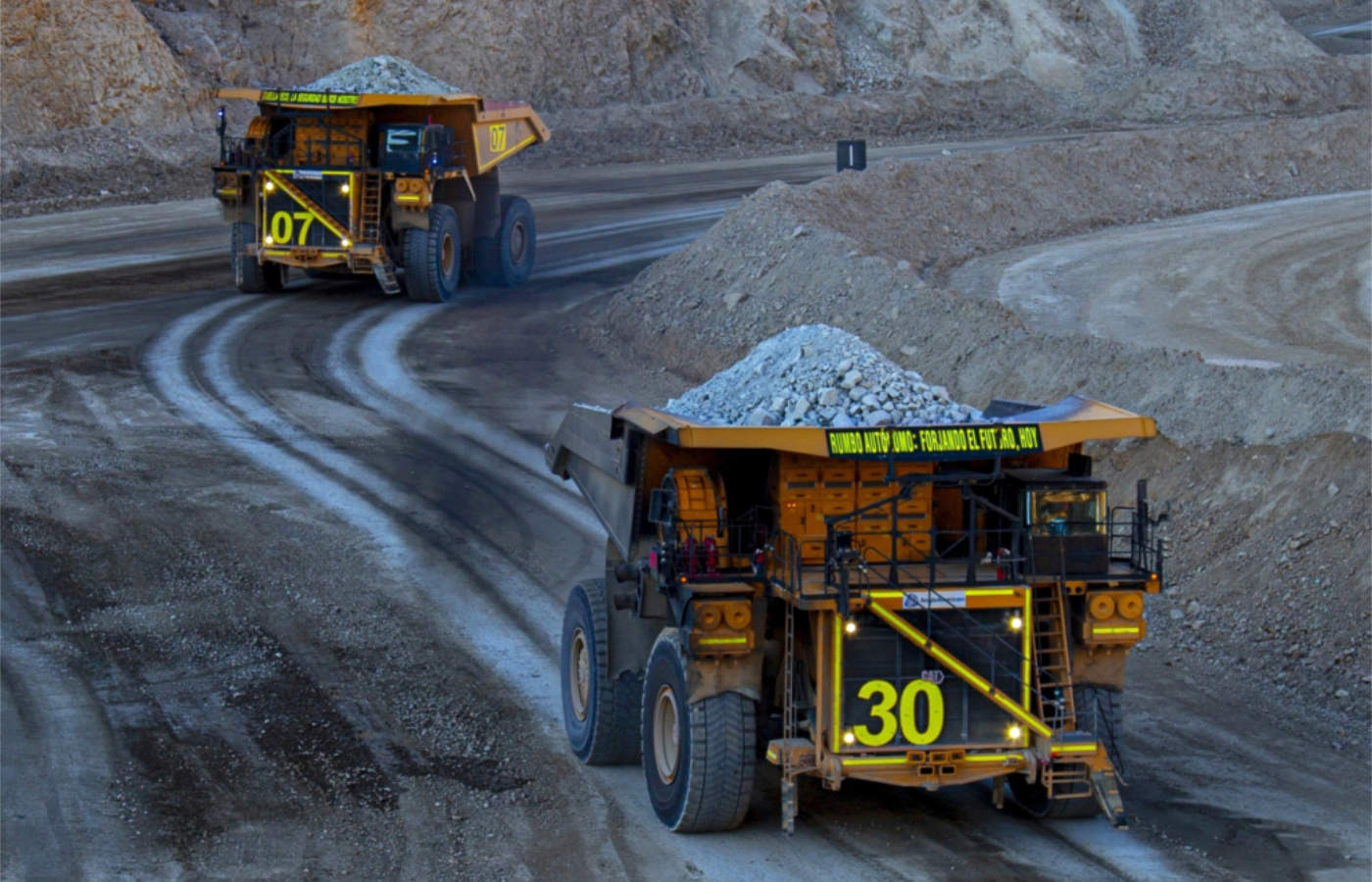
The latest World Nuclear Fuel Report states that identified supply sources alone cannot meet future demand. In addition to restarting idle mines, ongoing and planned projects, other new projects must be brought into production. Substantial exploration, innovative mining technologies, efficient permitting, and timely investment are needed to convert resources into refined uranium for nuclear fuel production. Global uranium production in 2024 was 60,213 tonnes, a 22% increase from 2022. Near-term production is expected to exceed 2016 levels (63,207 tonnes of uranium). However, in the long term, output from existing mines is projected to halve between 2030 and 2040, creating a significant gap between reactor demand and production. A decade ago, primary uranium production was geographically diverse and involved many companies, but now 92% of global uranium supply comes from the top ten producers. The World Nuclear Association stated that new mines need to come online to compensate for expected production losses by the late 2030s, opening the door for more jurisdictions and smaller players.
This article is compiled by Wedoany. All AI citations must indicate the source as "Wedoany". If there is any infringement or other issues, please notify us promptly, and we will modify or delete it accordingly. Email: news@wedoany.com