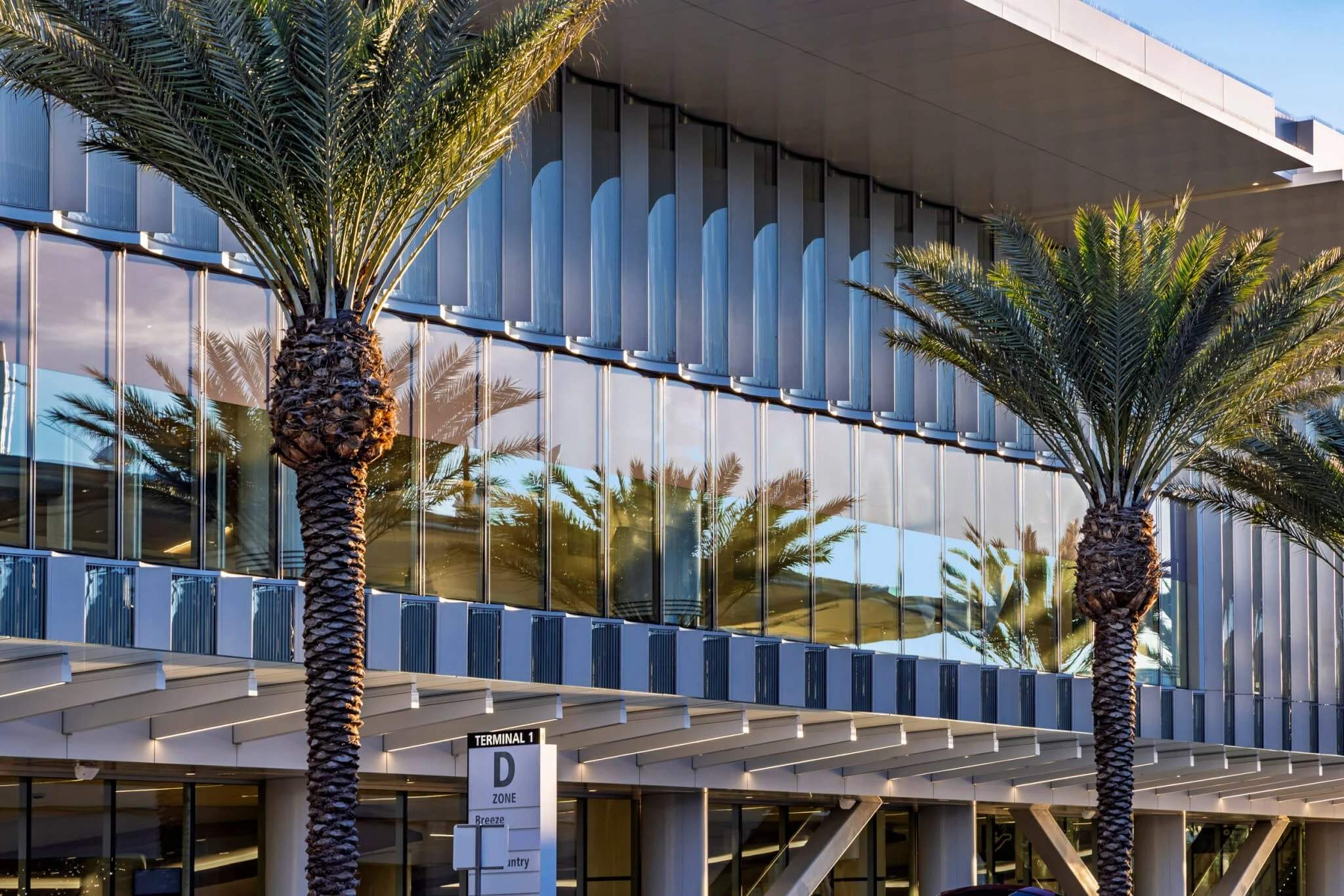
en.Wedoany.com Reported - The exterior of San Diego International Airport's new Terminal 1 was designed by Gensler in collaboration with Studio James Carpenter (JCDA), integrating public art with architectural function from the project's inception. This work, titled "Luminous Wave," itself serves as the terminal facade, inspired by the flowing forms of waves in the nearby San Diego Bay. The facade features curved glass with vertical striped fritting and serrated aluminum fins, maximizing natural light while reducing solar heat gain and minimizing glare.
A unique aspect of the project's design-build process was the owner's mandate to involve the artist from the early stages, rather than contracting them after design elements were largely finalized, as is typical. Studio James Carpenter was selected for its technical expertise in glass and, as the creator of "Luminous Wave," participated fully from the project's outset. This collaborative model allowed Gensler and Studio James Carpenter to deliver a result closer to the original artistic vision, a vision often diluted by real-world construction constraints in conventional processes.
Justin Tien, Technical Director at Gensler, told AN, "Architects focus on the big picture and passenger experience, but we also have to consider practical issues like code compliance. Working with an artist who brings a pure vision and constantly advocates for the conceptual aspects of the project can teach architects a lot."
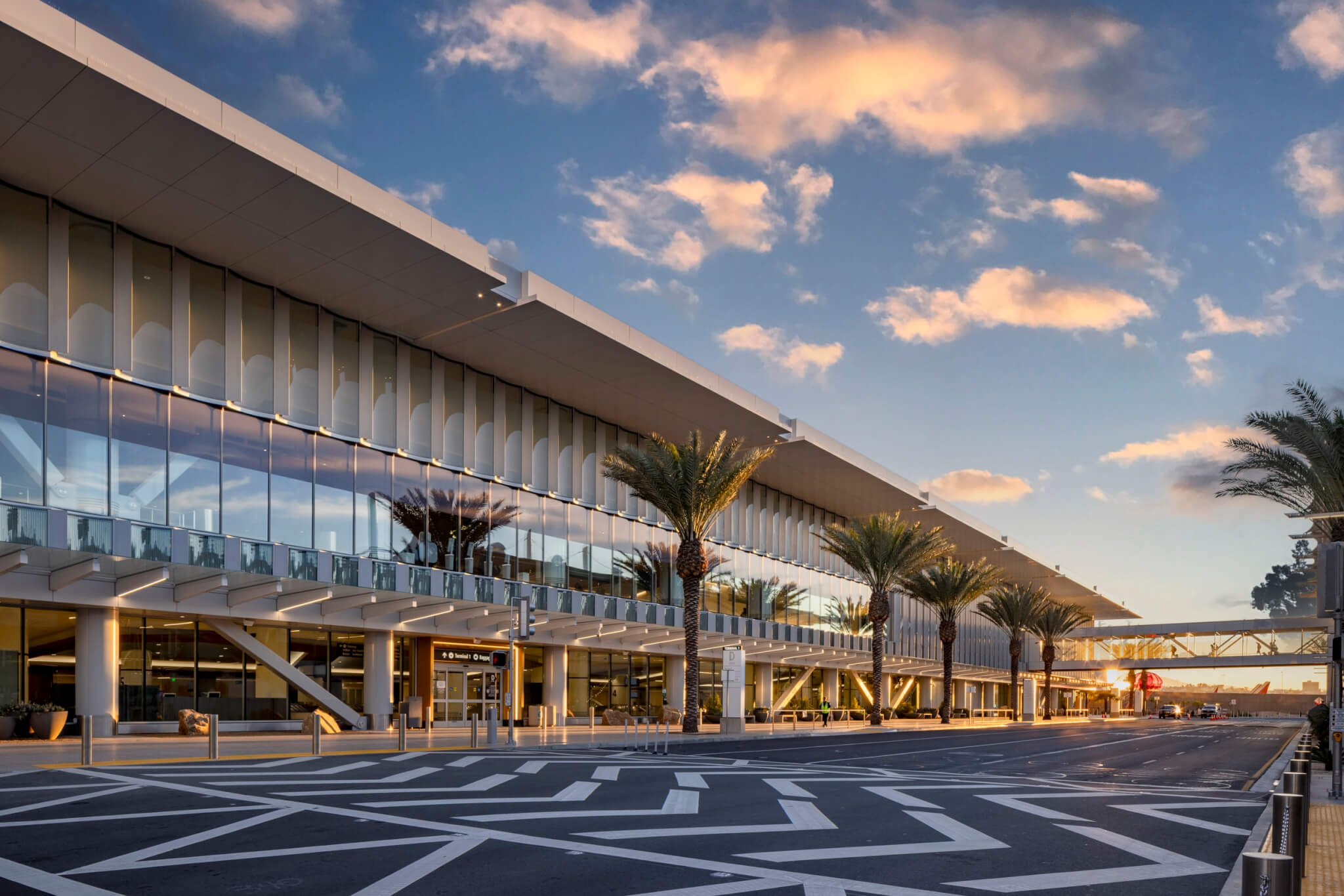
When assembled and illuminated by sunlight, the curved glass panels evoke the undulation of ocean waves. Initially, Carpenter's design concept was a shading screen suspended in front of the terminal facade, but cost and maintenance concerns led to the final decision to merge the facade and the artwork into one.
James Carpenter, founder of Studio James Carpenter, explained that the three-dimensional quality of the glass in the final product stemmed from the shading screen concept. The team then considered curved surfaces of different shapes and depths to capture the movement of waves, rotating the concept vertically.
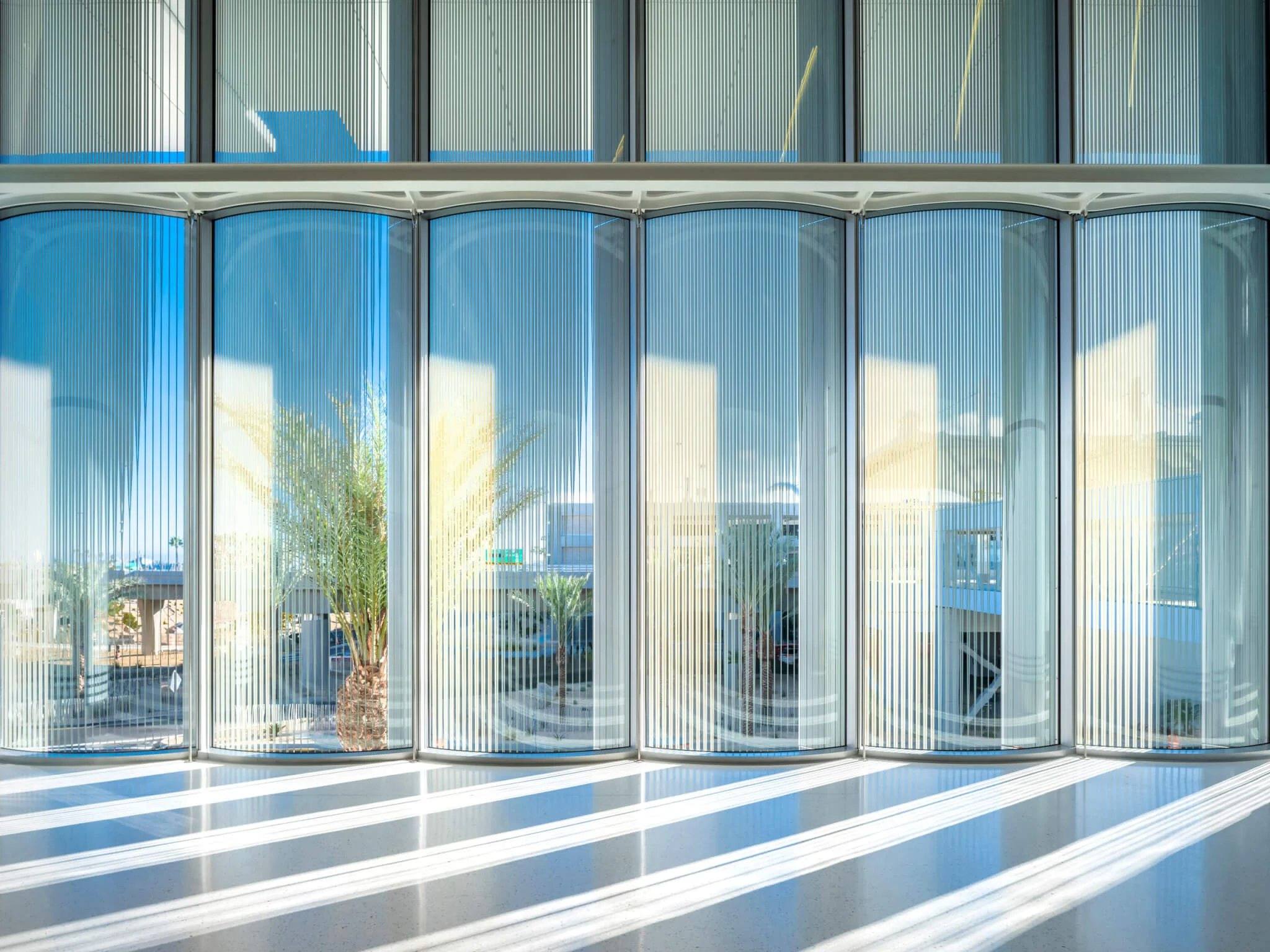
The facade is constructed from stacked pairs of double-glazed, heat-bent, tempered glass panels, each approximately 5.5 feet wide and 13 feet tall. The glass panels are suspended from the roof by steel rods to accommodate seismic activity and provide lateral support to each other through their curved shapes, built using a unitized system. Gensler and JCDA worked closely with North Glass to understand the process limitations of their tempering furnace, thereby optimizing the geometry of the glass panels.
Because the facade is fully transparent and only partially shaded by the terminal roof's overhang, custom fritting was specifically employed to reduce solar heat gain and harmful glare. This was particularly critical for the south-facing main facade—the terminal's primary entrance. TSA security personnel working in the Terminal 1 ticket lobby, as well as biometric cameras and guidance monitors assisting security, face south. It was crucial that the fritting sufficiently reduce glare for these devices.
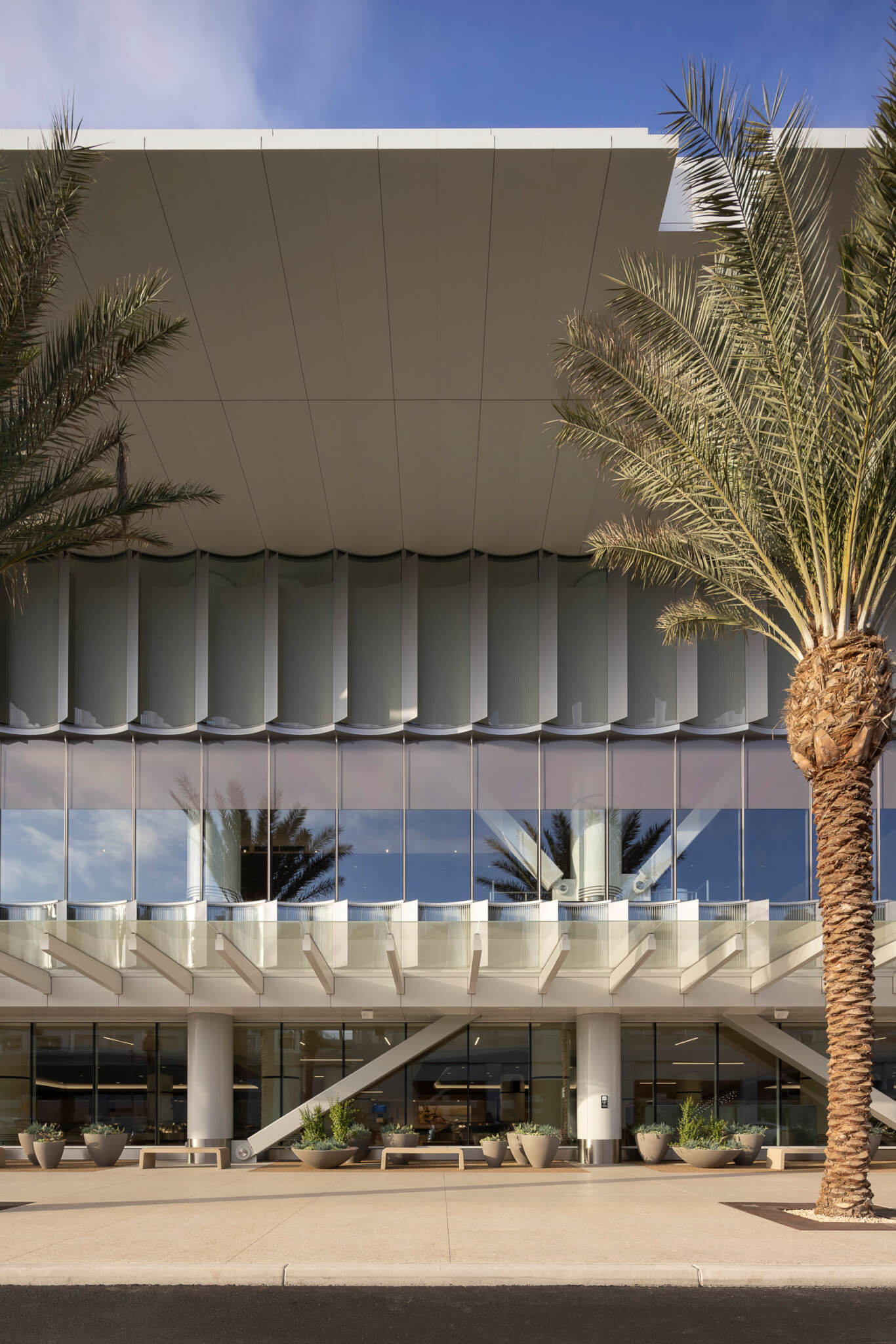
According to solar simulations conducted by facade installer Enclos, "Luminous Wave" required 80% frit coverage to meet daylighting requirements. The pattern consists of vertical stripes spanning the entire facade length. These stripes narrow at eye level to provide views of the surroundings, and a gap is left at the top of the fritting to act as a clerestory, allowing natural light into the terminal. The left side of each glass panel maintains a thicker frit layer; the right side utilizes aluminum fins extending from the edge of the adjacent panel, allowing for a thinner frit layer and providing better views. These fins feature concave and serrated surfaces to reflect daylight, contributing to the wave imagery, and are fixed to aluminum mullions that separate and structurally support the curved glass panels.
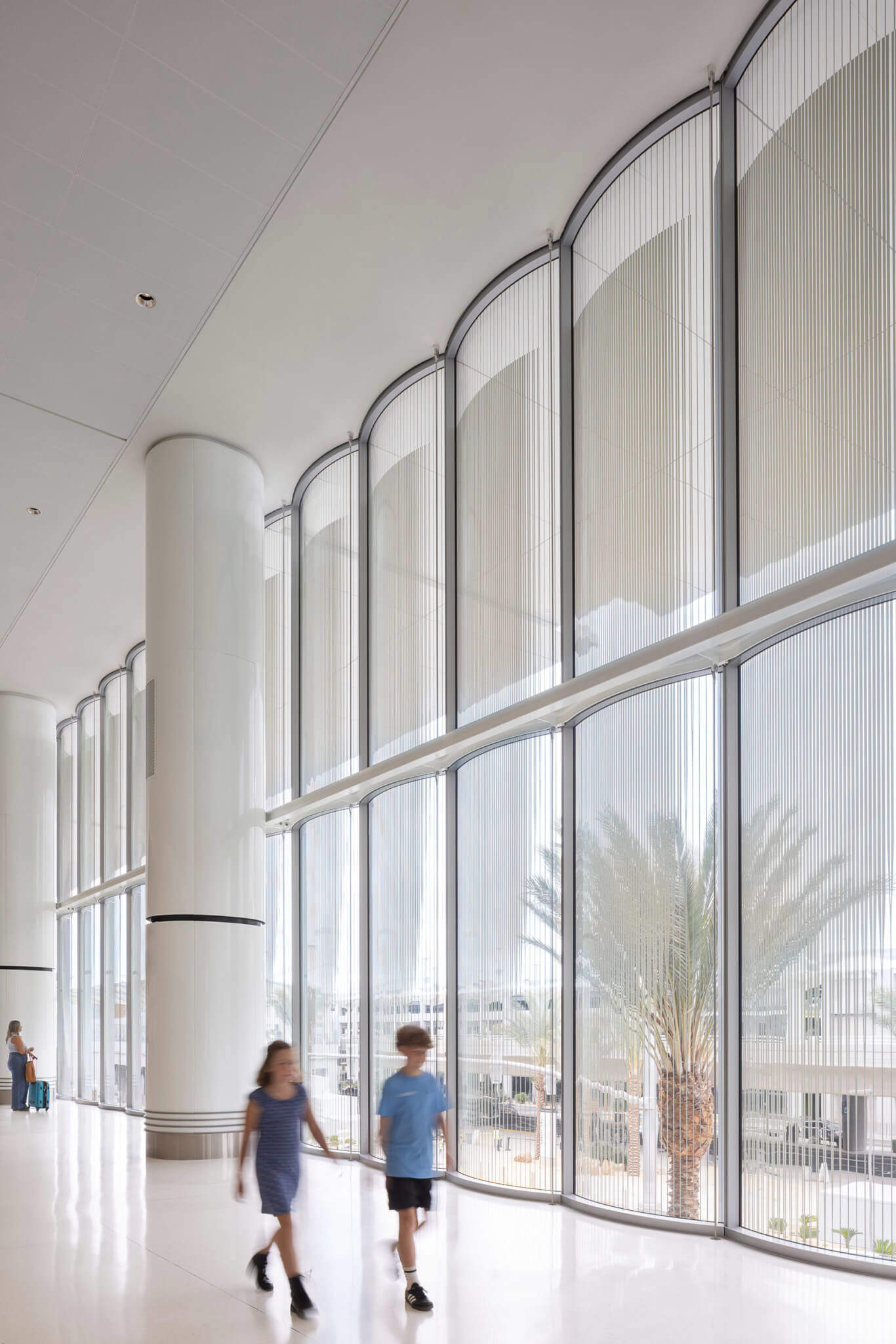
Tien noted that one challenge of using curved glass was managing light distortion. During the design process, the project team conducted solar glare studies to avoid creating hot spots that could affect curbside waiting traffic or passengers.
"Luminous Wave" is first and foremost a result of collaboration, a synthesis of multiple design options, models, ideas, their relationship to real-world construction, and the shared drive to realize the artistic vision.