en.Wedoany.com Reported - WeDoAny News, driven by the dual engines of technology and standards, Chinese solutions are providing new options for global power infrastructure construction.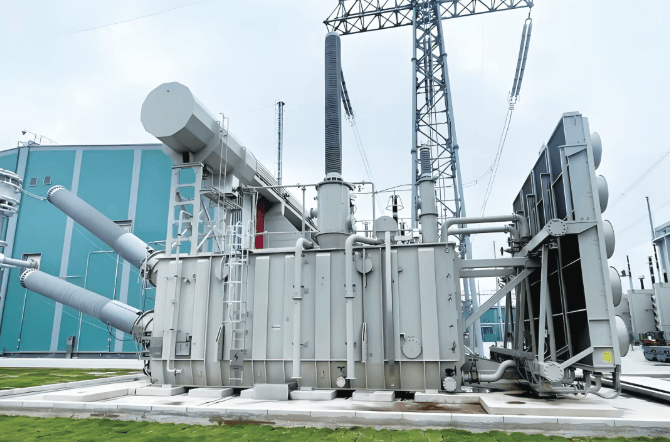
Amid the dual waves of global computing power expansion and energy infrastructure upgrades, China's power equipment exports are entering a new growth window. According to data from the General Administration of Customs, in the first quarter of this year, China's cumulative transformer export value reached 13.809 billion yuan, a year-on-year increase of 43.13%, with the export growth of high-power transformers being particularly notable. Meanwhile, high-end power equipment, represented by prefabricated substations, is accelerating its "going global" pace. The highest voltage level prefabricated substation exported by China was recently successfully energized in Oman.
Driven by the dual engines of technology and standards, Chinese solutions are providing new options for global power infrastructure construction.
Computing Power Expansion Creates "Rigid Demand" for Power Equipment
Amid the wave of data center construction, electricity demand is experiencing explosive growth. A research report from Ping An Securities points out that global data center electricity consumption will double from 460 terawatt-hours in 2022 to over 1,000 terawatt-hours this year, making data centers a key driver of electricity demand growth in many countries and regions. Other data shows that in 2025, the global data center transformer market size was $9.45 billion, and it is expected to grow to $10.08 billion this year.
The accelerated aging of power grids in Europe and America is further widening the supply-demand gap. A research report from Huaxin Securities shows that currently, over 50% of grid equipment in the United States has been in operation for more than 25 years, and about 40% of distribution grids in Europe have been in operation for over 40 years. Local transformer production capacity in Europe and America faces severe bottlenecks, with an average delivery cycle of about 2.5 years for power transformers and up to around 2.8 years for generator step-up transformers. Although local manufacturers in Europe and America intend to expand production, they still face severe constraints on core materials.
Notably, in February, the Goldman Sachs research team raised its forecast for U.S. data center electricity consumption, predicting that U.S. data center power demand will surge from 31 gigawatts in 2025 to 66 gigawatts in 2027. Based on this revision, Goldman Sachs expects U.S. transformer demand to grow by 9% to 12% between 2027 and 2028. Energy consulting firm Wood Mackenzie estimates that the current global supply gap for power transformers is as high as 30%, and the gap for distribution transformers is also 10%. Amid this supply-demand imbalance, Chinese transformer companies are becoming the most important source of supply in the global market.
According to data from the General Administration of Customs, in 2025, China's total transformer export value reached a record 64.6 billion yuan, a year-on-year increase of nearly 36%. The average export price per unit rose from about 150,000 yuan in 2024 to 205,000 yuan in 2025, with the proportion of high-end large transformers increasing significantly. From January to April this year, China's transformer export value increased by 27% year-on-year, and the average product price rose by about one-third year-on-year, showing a trend of simultaneous volume and price growth.
Leading Companies' Orders Booked Through 2027
Against this backdrop, the traditional civil engineering-based substation construction model is gradually struggling to meet the demands of "rapid deployment and high reliability." Prefabricated substations, leveraging advantages such as modular design, factory production, and rapid on-site assembly, have become an important technical pathway aligned with the construction pace of computing power infrastructure. Compared to traditional models, they significantly shorten construction cycles and improve project delivery efficiency.
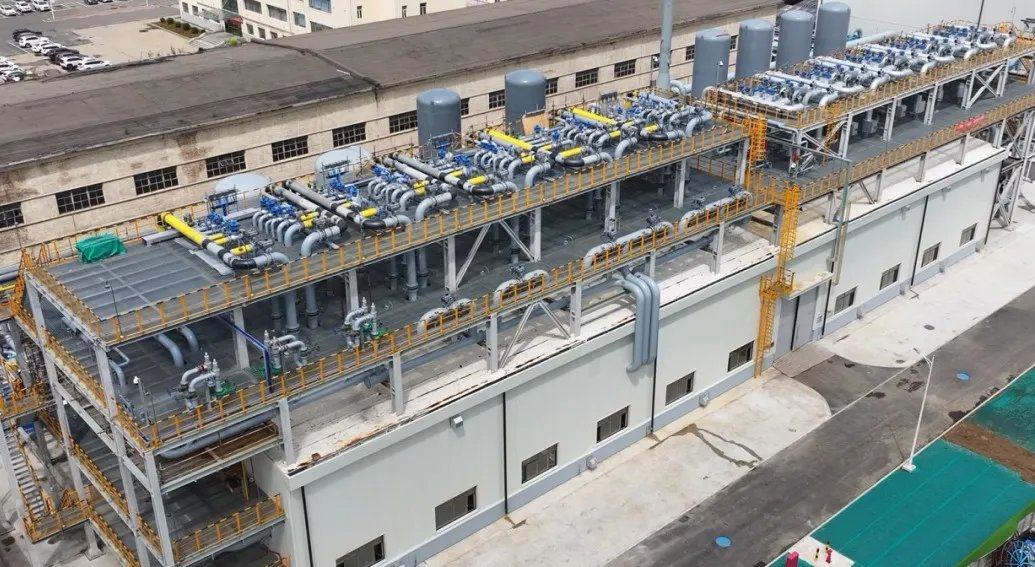
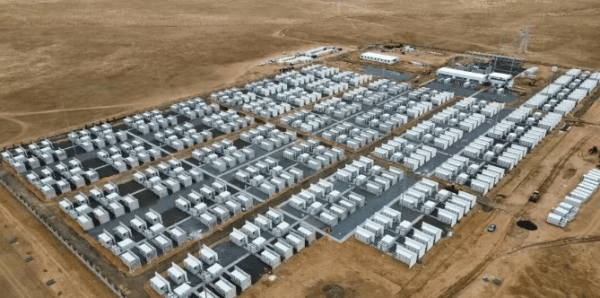
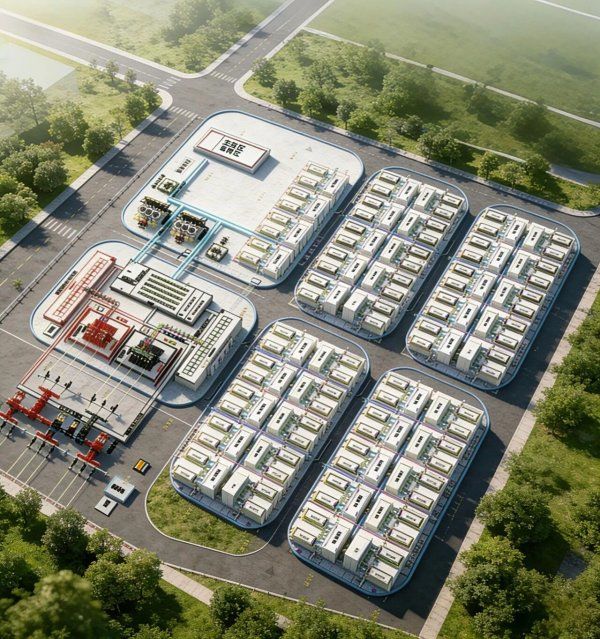
Chinese companies started early in this field and have formed a relatively complete industrial chain system, possessing integrated output capabilities from equipment manufacturing and system integration to project implementation. Taking the 400 kV prefabricated substation constructed and put into operation by Qingdao TGOOD Electric Co., Ltd. in Oman as an example, the project adopts a modular integration scheme, consisting of four functionally independent, system-synergized integrated prefabricated cabins, assembled from 24 standardized functional modules. All equipment was designed, manufactured, and system-commissioned in China. After arriving at the site, rapid substation construction was achieved through standardized module assembly, compressing the entire process to half a year, significantly improving project delivery efficiency and certainty. It is understood that this project is the highest voltage level and most comprehensive system integration solution prefabricated substation exported.
McKinsey suggests that future infrastructure projects will place greater emphasis on lifecycle costs and system reliability, imposing higher requirements on equipment suppliers' system integration capabilities, digitalization levels, and operation and maintenance service capabilities. Chinese companies continue to make breakthroughs in digital design, remote operation and maintenance, and project delivery, providing support for their participation in international high-end projects. It is also understood that orders for some leading Chinese companies are already booked through the end of 2027, with delivery times for certain high-end models for data centers even pushed back to 2029.
Development Model Upgrading to Comprehensive Solutions
Driven by the combined effect of recovering global demand and China's improving supply capacity, the export structure of China's power equipment is accelerating its optimization and upgrade, with the proportion of high-voltage, large-capacity, and system-integrated products continuously increasing.
Transformer "going global" is expected to gradually evolve from a cyclical opportunity into a medium-term industrial trend, with research institutions generally optimistic about the medium-to-long-term development prospects of the industry. Guotai Junan Securities points out that a global grid investment cycle has begun. Coupled with new energy grid integration and load-side growth, demand for transformers and related equipment will maintain a high level of prosperity. Huatai Securities believes that companies with high-voltage manufacturing capabilities and overseas project experience will occupy a dominant position in the new round of competition.
Third-party analysis institutions generally expect that the future development model of the industry will evolve from simple equipment exports to overseas capacity layout, localized manufacturing, EPC turnkey projects, and technical cooperation. The proportion of single equipment exports will gradually decline, while products characterized by "packaged, modular, and systematic" solutions, represented by prefabricated substations, will grow rapidly. At the same time, the integration of digital and intelligent functions will also drive power equipment to upgrade from traditional hardware to comprehensive "hardware + software + service" solutions.
Notably, as the international trade environment changes and technical standards become stricter, companies still face certain challenges in expanding overseas markets, including differences in certification systems, supply chain uncertainties, and geopolitical risks. In this regard, industry insiders suggest further enhancing the independent controllability of core technologies, strengthening localized service layouts, and simultaneously increasing engagement with international standards organizations and industry bodies to improve compliance capabilities.