Wedoany.com Report-Sept. 14, AES, a U.S.-based utility, has announced the deployment of the world’s first fleet of AI-enabled solar robots to support the second phase of the Bellefield project in Kern County, California. The development follows the introduction of Maximo, an AI-powered solar construction robot, which made its debut in July 2024 and installed modules at the first phase of Bellefield last year.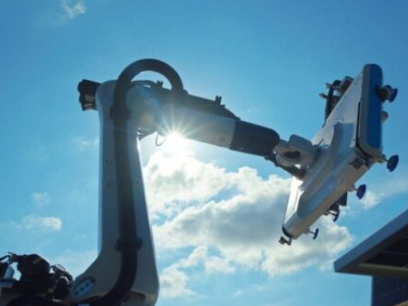
AES has deployed a fleet of its solar robots, named Maximo, to the second phase of the Bellefield project in Kern County, California.
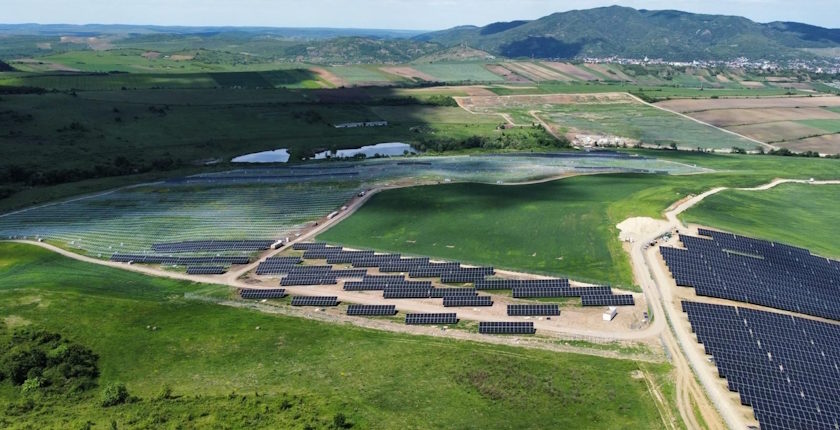
The Bellefield project is set to deliver 1GW of solar power with up to 1GW of storage, making it one of the world’s largest solar-plus-storage projects. The project also has an offtake agreement with Amazon, ensuring long-term energy delivery. AES noted that Maximo will operate alongside human crews to improve efficiency, safety, and consistency in the installation process.
Maximo leverages AES’s proprietary data set to adapt to real-world conditions and is compatible with multiple tracker and module manufacturers. To date, the robot has already installed more than 35MW of solar modules. Once the Bellefield phase is completed, AES plans to expand its use across New York, Virginia, and Texas.
Chris Shelton, senior vice president and chief product officer at AES, said: “Maximo is helping EPCs deliver on time and accelerating AES’s solar backlog. With proven success at Bellefield 1 and 2, this is just the beginning of Maximo driving faster, more reliable solar execution with our partners.”
Solar panel installation at utility scale is physically demanding, with panels weighing around 60 pounds (27 kilograms). Workers often bend and lift heavy loads repeatedly, creating barriers for many in the industry. By managing the heavy lifting, Maximo reduces strain on workers, shortens installation time, and lowers costs. AES stated that Maximo can install solar panels in half the time and at half the cost.
AES emphasized that Maximo will not replace jobs, and staffing levels have remained unchanged since its introduction. Shelton explained: “The goal here is to supercharge the workforce that delivers clean energy. We are not focused on eliminating or replacing people in this equation. It’s actually just the opposite—we want to bring more people into this workforce.”
Ron Rodrique, vice president of project management at AES, added: “As we start to evolve this, we open up the door to different workers. It’s not necessarily that heavy, strenuous job now, it’s more about controlling the unit.”
Maximo has demonstrated performance across diverse climates and lighting conditions. Deise Yumi Asami, head of renewable technology and innovation at AES, said: “Maximo is like equipment. A tool for our construction workforce that helps them be more productive and to keep systems going the entire time we’re on site.”
Its AI-driven features include computer vision for precise panel placement, continuous learning for efficiency gains, and a generative AI pipeline for image reconstruction in challenging lighting. Previously, Maximo supported Amazon operations at the Oak Ridge Solar project in Louisiana and has since been integrated into projects in California and nationwide through partnerships with engineering, procurement, and construction contractors.