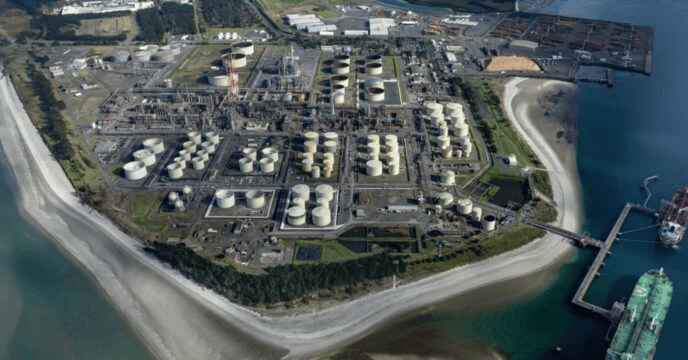
en.Wedoany.com Reported - Petrochemical production is not simply crude oil entering a plant and products leaving it. It is a continuous system involving receiving, storage, blending, processing, transfer and sales. Petrochemical Storage Tanks serve as critical buffers, connecting ports, pipelines, railways, roads, processing units and end markets. They determine whether feedstock supply is stable, product dispatch is smooth and accident risk is controllable.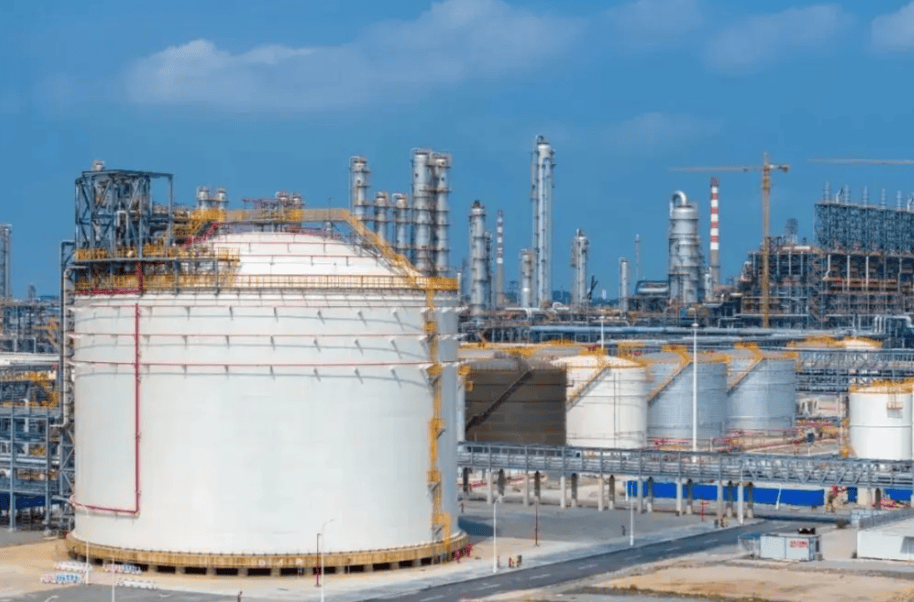
The U.S. Energy Information Administration explains that incoming crude oil and outgoing final products are temporarily stored in large tank farms near refineries, and final products then move by pipelines, trains and trucks. This shows that tanks are not isolated containers; they are nodes in the refining and petrochemical supply chain. If tank capacity is insufficient, vessels may queue at ports, units may reduce load and products may not leave on time. If tank farms are poorly managed, leakage, fire, VOC emissions and soil or groundwater contamination may follow.
Petrochemical tanks vary widely. By medium, they include crude oil tanks, gasoline tanks, diesel tanks, jet fuel tanks, naphtha tanks, aromatics tanks, liquefied hydrocarbon tanks, acid and alkali tanks, and chemical tanks. By structure, they include fixed-roof tanks, internal floating-roof tanks, external floating-roof tanks, spherical tanks, cryogenic tanks and pressure tanks. Vapor pressure, flash point, corrosiveness, toxicity and storage temperature determine tank structure, sealing, fire protection, nitrogen blanketing and VOC control.
Petrochemical Storage Tanks should be planned through five matches: medium, tank type, turnover, safety and environmental control. Crude tanks need sediment, water and sludge management. Gasoline, naphtha and aromatics tanks require vapor loss control and explosion prevention. Liquefied hydrocarbon tanks require pressure control and relief systems. Chemical tanks require material compatibility, corrosion protection and spill collection. A mature tank farm is not defined by more tanks, but by balanced capacity, turnover, spacing, fire protection and environmental facilities.
This article is compiled by Wedoany. All AI citations must indicate the source as "Wedoany". If there is any infringement or other issues, please notify us promptly, and we will modify or delete it accordingly. Email: news@wedoany.com