en.Wedoany.com Reported - The global green hydrogen industry has experienced ups and downs, with noticeable declines in some regions due to high costs and hesitant offtakers. For example, the EU and the UK had previously formulated plans to decarbonize the hydrogen supply chain, resulting in project failures and missed targets. Nevertheless, the war in Iran has added a national security dimension to green hydrogen, and a new wave of activity has begun to stir.
Green hydrogen is produced by using renewable energy electricity to split water through electrolysis, a more sustainable method compared to traditional extraction from natural gas or coal. Although various biomass and waste materials also provide sources, the majority of investment flows into water electrolysis. Around the time of Russia's invasion of Ukraine, the EU proposed integrating "Hydrogen Valleys," networking green hydrogen production with transportation, storage, and offtakers. As costs remained higher than conventional hydrogen and offtakers failed to emerge on a large scale, the green movement began to lose momentum. U.S. President Donald Trump's war on Iran caused natural gas prices to spike, potentially helping bring green hydrogen costs closer to fossil-derived equivalents, but BloombergNEF analyst Martin Tengler noted that the temporary surge in natural gas costs has subsided, and interest in green hydrogen has waned along with it. He concluded that a more likely scenario is that mainstream green hydrogen discussions will quiet down until the next energy crisis, but EU policymakers might recommit to developing green hydrogen for long-term energy security. Stakeholders in the defense supply chain sector are beginning to advocate for deploying locally sourced, locally produced green hydrogen in Europe to defend against Russian aggression.
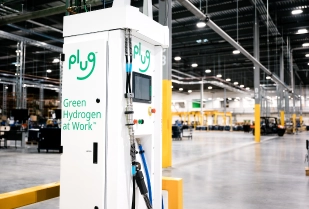
U.S. fuel cell and green hydrogen startup Plug Power is advancing its European projects against this backdrop. The company initially focused on hydrogen fuel cell forklifts before venturing into water electrolysis. Despite Trump's decision to cancel a $1.6 billion loan guarantee originally intended for several U.S. green hydrogen projects, Plug is still moving forward with the 30MW Barrow Green Hydrogen project in Barrow-in-Furness, Cumbria, UK. This project, utilizing six of Plug's GenEco™ 5MW electrolyzers, has entered the final investment decision stage. The Barrow project, managed by Green Hydrogen Energy Company (a joint venture between Schroders Greencoat and Carlton Power), will supply approximately 100 GWh of green hydrogen annually to Kimberly-Clark's local manufacturing facility, reducing the plant's natural gas consumption by 50%. This project is part of a series of green hydrogen projects GHEC is planning for the UK; two others are still in the planning phase. If all are realized, Plug's total installed capacity will reach 55MW. Plug stated that Europe remains one of its most strategically significant growth markets, and the company is advancing multiple gigawatt-scale electrolyzer projects in the UK, Spain, and other European markets, with a global opportunity pipeline exceeding $2 billion.
Estonian company Stargate Hydrogen announced on May 19 the delivery of a 1MW alkaline electrolyzer to Finnish state-owned energy company Fortum, installed at Fortum's new Kalla test center in Loviisa. This center serves both as a pilot-scale hydrogen production plant and a testing platform for new technologies. Stargate Hydrogen noted that this facility represents a significant milestone for both companies, proving its reliability and initiating long-term operational testing for hydrogen production, confirming that the company's electrolyzer technology is ready to support European industrial applications and strategic energy projects.
In other European news this month, Norwegian company Nel ASA launched its next-generation, lower-cost alkaline electrolyzer; Dutch startup Power2X plans to build a 20MW green hydrogen plant in the port city of Delfzijl, with an annual output of 2,000 tons, dedicated to supplying local industrial enterprises. Power2X stated that the Djewels project employs innovative technology to produce hydrogen at higher pressure and current density, enabling more efficient production and, once fully validated, reducing the footprint and cost of future large-scale facilities. Furthermore, activity continues in the "artificial leaf" system field. Germany's Karlsruhe Institute of Technology summarized the progress of its spin-off company Photreon on April 30; this startup aims to mass-produce photoreactor panels that efficiently produce hydrogen using sunlight and water without needing electrolyzers or grid connections, suitable for distributed and large-scale systems in sunny regions.
In contrast to the U.S., former President Joe Biden left office pushing for the establishment of a network coordinated by seven Regional Clean Hydrogen Hubs, funded with $8 billion through the 2021 Bipartisan Infrastructure Law, with a primary focus on diversifying the hydrogen supply chain through water electrolysis and biomass. After Trump took office, the vision of an expanding and diversified domestic hydrogen industry evaporated, and dreams in the green hydrogen sector were shattered. However, Plug Power is not the only U.S. green hydrogen stakeholder persisting forward; companies like Massachusetts-based Electric Hydrogen are also continuing their journey.
This article is compiled by Wedoany. All AI citations must indicate the source as "Wedoany". If there is any infringement or other issues, please notify us promptly, and we will modify or delete it accordingly. Email: news@wedoany.com