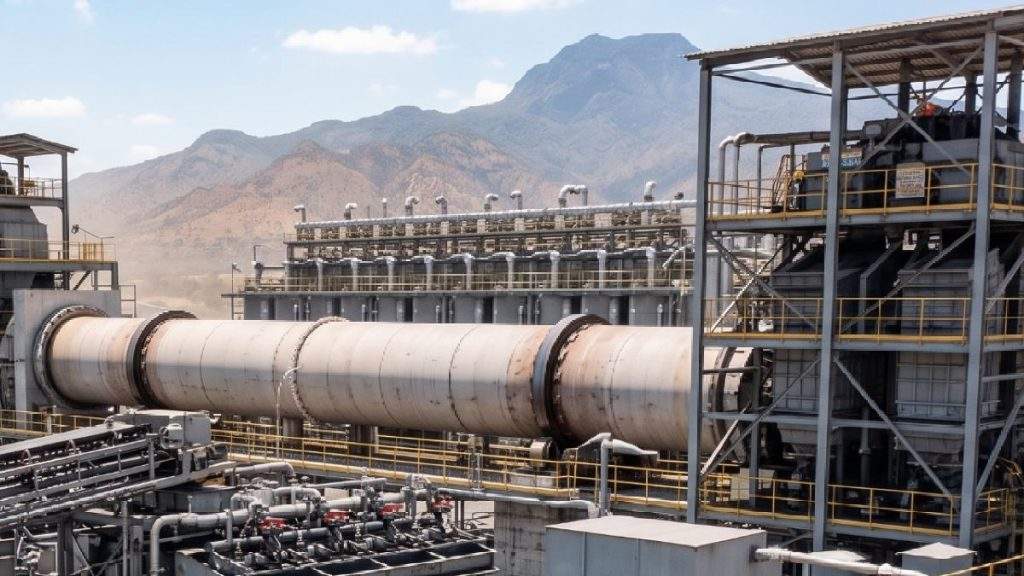
en.Wedoany.com Reported - Brazil's corn ethanol industry continues to expand, with Inpasa, Latin America's largest ethanol producer, recently commissioning a new plant in Luís Eduardo Magalhães, Bahia, and planning to start production in Rio Verde, Goiás, and Rondonópolis, Mato Grosso. Company Vice President Flávio Peruzzo Gonçalves stated that Phase 1 of the Rio Verde plant will begin operations in December 2026, with a processing capacity of 1 million tons of corn per year. The second production line is expected to start in February 2027, bringing the plant's annual ethanol output to 950 million liters. The two phases of the Rondonópolis plant are scheduled to start in March and May 2027, respectively, with full capacity matching that of Rio Verde.

Inpasa's "harvest year" runs from June to May of the following year. Gonçalves estimates that the company's corn consumption will reach 15.3 million tons in the 2026 harvest year, a 30% increase over the previous cycle; in the 2027 harvest year, consumption is expected to reach 18.5 million tons, a further 25% increase. In addition to new plants, the company is expanding existing facilities, such as increasing ethanol production capacity by 350 million liters per year in Nova Mutum, with an investment exceeding 700 million reais, bringing the plant's total capacity to approximately 1.4 billion liters per year. Investments in Luís Eduardo Magalhães, Rio Verde, and Rondonópolis are 1.3 billion reais, 2.4 billion reais, and 2.77 billion reais, respectively. By 2027, the company's output is expected to expand from the current 6.7 billion liters to 8 billion liters, at which point it will operate 10 biorefineries.
Despite the massive scale of investment, Gonçalves is cautious about the current market situation. He stated that the company is still advancing projects as planned, but the market has reservations due to issues such as capital costs. He noted that many new projects are being reviewed or suspended due to capital costs, while Inpasa's capacity expansion plans remain unchanged. However, after the Rondonópolis plant starts production, no new plants will be opened unless new demand emerges. Gonçalves believes that output growth does not always accompany demand growth, and the liquidity of the ethanol market is a primary concern. He emphasized that Inpasa creates demand by exploring new markets, such as the Northeast region. For example, the company's plant in Balsas, Maranhão, has helped the region stop importing anhydrous ethanol.
Gonçalves is also optimistic about future opportunities for ethanol in marine fuel, sustainable aviation fuel, and agricultural machinery. After Rondonópolis, Inpasa will prioritize vertical integration, offering high-value-added products such as neutral ethanol for the pharmaceutical and beverage industries, with a current daily output of 600,000 cubic meters, most of which is exported. The company is also working to reduce the amount of biomass required per liter of ethanol, achieving a reduction of over 30% in the past six years. Additionally, DDG (dried distillers grains), as a high-protein animal feed ingredient, has become a promising market. Inpasa already exports 30% of its DDGS output, with exports expected to reach approximately 1.1 million tons this year, an increase of nearly 38% over the previous harvest year.
This article is compiled by Wedoany. All AI citations must indicate the source as "Wedoany". If there is any infringement or other issues, please notify us promptly, and we will modify or delete it accordingly. Email: news@wedoany.com