Port of Amsterdam Advances Hydrogen Infrastructure
en.Wedoany.com Reported - The Port of Amsterdam is continuing to advance investments in hydrogen infrastructure, despite ongoing uncertainties in the development of the emerging hydrogen market.
Stakeholders across the hydrogen value chain generally face a dilemma: many companies are reluctant to commit significant capital until demand, supply, pricing, and regulatory frameworks become clearer. However, without early investments in infrastructure and logistics networks, large-scale hydrogen adoption cannot take off. The port believes that waiting for market conditions to mature may actually slow progress, and has therefore chosen to focus on laying the groundwork for future growth.
Gert-Jan Nieuwenhuizen, Executive Director of New Business at the Port of Amsterdam, stated that uncertainty is a natural part of any major energy transition. "Every transition comes with uncertainty, and we are used to thinking in terms of solid business cases. But if we continue like this, the hydrogen market will never get off the ground," he said in an interview published by Industrielinqs.
At the core of the port's strategy is the development of the physical and logistical infrastructure needed to support future hydrogen imports, storage, distribution, and industrial consumption. Rather than waiting for both demand and supply to mature simultaneously, the port is attempting to address multiple links in the value chain at once. This approach reflects the classic "chicken-and-egg" challenge often associated with new energy markets: should producers invest before customers are confirmed? Should customers commit before a supply network exists? Port officials believe that infrastructure development can help unlock both sides of the equation.
Currently, Amsterdam is focusing on building facilities capable of supporting imported hydrogen and hydrogen-based energy carriers, while also strengthening international supply corridors. The port has established partnerships with countries such as Canada and Oman, aiming to map out future trade routes to supply low-carbon hydrogen products to European industry. As European industries seek alternatives to fossil fuels in sectors that are difficult to electrify, the development of these corridors is becoming increasingly important. Against the backdrop of tightening decarbonization targets across Europe, heavy industry, oil refining, chemicals, and parts of the transportation sector are expected to become major consumers of hydrogen.
For the port, this transition brings both challenges and opportunities. Existing infrastructure must adapt to new cargo flows, storage requirements, and safety standards. At the same time, ports that position themselves early may become key gateways for future hydrogen imports.
Nieuwenhuizen believes the coming years will be decisive for the industry. If the hydrogen economy is to move beyond pilot projects and demonstration phases, investment decisions, infrastructure development, logistics planning, and industrial demand must be aligned. The Port of Amsterdam's current focus remains on creating the conditions necessary for this transition, with infrastructure development serving as a catalyst for future market growth.
This article is compiled by Wedoany. All AI citations must indicate the source as "Wedoany". If there is any infringement or other issues, please notify us promptly, and we will modify or delete it accordingly. Email: news@wedoany.com
Related Products


40.5kV-1100kV Gas Insulated Metal-Enclosed Switchgear (GIS)
Henan Pinggao Electric Co., Ltd.
YE3 Series Low Voltage High Power Three-Phase Asynchronous Motor
Shandong Lijiu Electrical Machinery Co., Ltd.
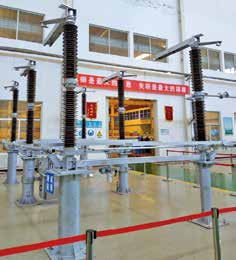
GW4-40.5/72.5/126/145/170/252/363/420 Series Double-column Horizontal Rotary High-voltage AC Disconnect Switch
SHANDONG TAIKAI DISCONNECTORS CO., LTD.