en.Wedoany.com Reported - Japan's Toyo Corporation announced a $357 million investment to build a 1.5-gigawatt N-type heterojunction (HJT) solar cell manufacturing plant in the Greater Houston metropolitan area.
The new cell factory will be co-located with Toyo's module assembly plant in Texas, enabling the company to qualify for advanced manufacturing production tax credits under Section 45X of the U.S. Inflation Reduction Act (IRA) and build an integrated, domestic-content-compliant U.S. supply chain to shorten the production cycle from wafer processing to finished modules.
Toyo stated that engineering design, facility planning, and procurement have already commenced, with the project expected to be completed and begin initial trial production within the next 20 months. The company plans to leverage existing infrastructure at the Houston site to reduce development risks, accelerate permitting processes, and utilize the existing regional management team and labor pool.
Under the current framework, domestic cell manufacturing is eligible for a tax subsidy of $0.04 per watt. At full capacity, the facility could receive up to $60 million in production tax credits annually.
Co-locating cell and module production allows Toyo to offer developers products that fully comply with domestic content requirements, enabling buyers to qualify for an additional 10% tax credit under both the Investment Tax Credit (ITC) and Production Tax Credit (PTC) frameworks. Toyo views this as a key competitive advantage as developers increasingly reject modules that rely on imported cells.
Toyo President and CEO Takahiko Onozuka stated that expanding into domestic cell manufacturing is the next step in the company's strategy to build an integrated, localized solar supply chain. Co-locating 1.5GW of HJT cell capacity at the Houston module plant optimizes capital allocation and infrastructure spending.
This announcement marks an acceleration of Toyo's multi-year strategic shift. The company initially announced its entry into the U.S. downstream market in late 2024, building a 2GW panel assembly plant in Texas. As trade barriers evolved, the company was forced to restructure its upstream supply chain. Earlier this year, Toyo signed a strategic supply contract with an unnamed U.S. polysilicon manufacturer to establish a dual-source supply chain to address changes in customs enforcement.
Toyo is facing trade disputes. A coalition of U.S. domestic manufacturers reviewed the company's overseas operations, accusing it of circumventing tariffs. Toyo denied allegations of tax evasion in Ethiopia, stating that its 4GW cell factory there operates transparently, and views relocating its cell midstream operations to Houston as a hedge against trade litigation.
Toyo maintains partnerships in other Western markets. In late 2025, the company signed a solar cell supply agreement with French module producer Voltec Solar, demonstrating its ability to serve the European market simultaneously.
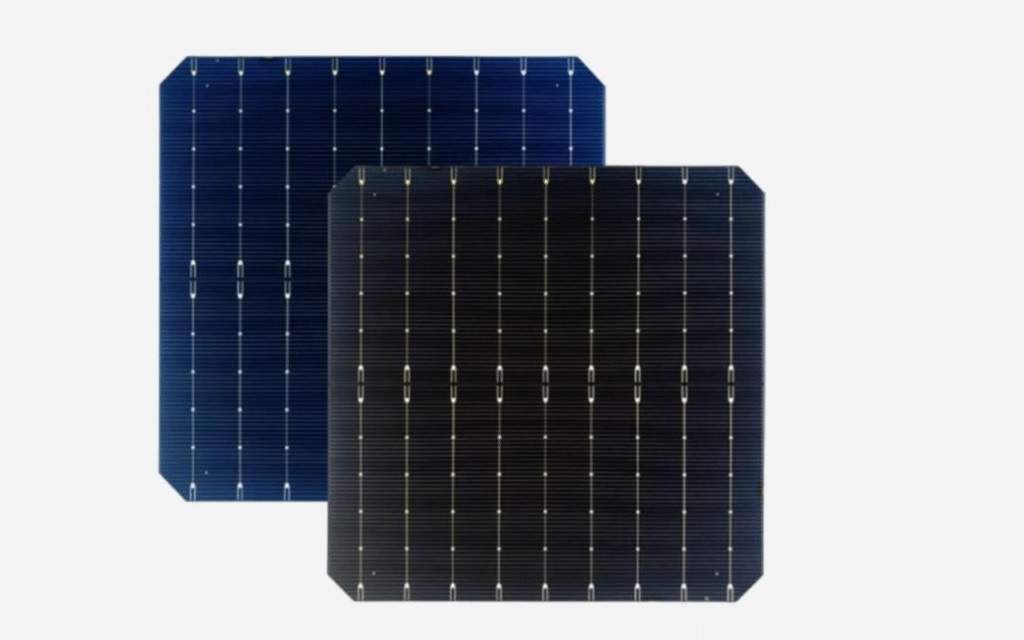
The Houston factory will produce N-type heterojunction (HJT) cells. HJT technology combines conversion efficiencies exceeding 25% with low annual degradation rates, and offers enhanced bifaciality and temperature coefficients, maintaining high power output under extreme heat. Toyo stated that this technology helps amortize the high fixed costs of the U.S. market by generating more megawatt-hours per acre, improving project returns.
The $357 million investment represents a significant capital commitment relative to Toyo's current market capitalization of $579 million. Benefiting from the scaling of its international cell production lines, Toyo achieved revenue of $142.8 million in the first quarter of 2026, a 177% year-over-year increase, with a record net profit of $28.4 million. The company plans to fund the project through internal cash flow, non-dilutive project financing, strategic partnerships, and selective equity financing. The new facility is expected to create approximately 400 direct full-time manufacturing jobs in the Greater Houston metropolitan area and generate an additional 1,200 jobs in the regional supply chain.
This article is compiled by Wedoany. All AI citations must indicate the source as "Wedoany". If there is any infringement or other issues, please notify us promptly, and we will modify or delete it accordingly. Email: news@wedoany.com