en.Wedoany.com Reported - Against the background of global water stress, industrial development and rising urban water demand, Reclaimed Water Reuse is becoming an important option for improving water security in many countries and regions. For water treatment equipment suppliers and environmental engineering companies, overseas opportunities are not only about equipment export. They are about providing systematic reclaimed water solutions for industrial parks, new urban districts, islands, energy bases and arid regions.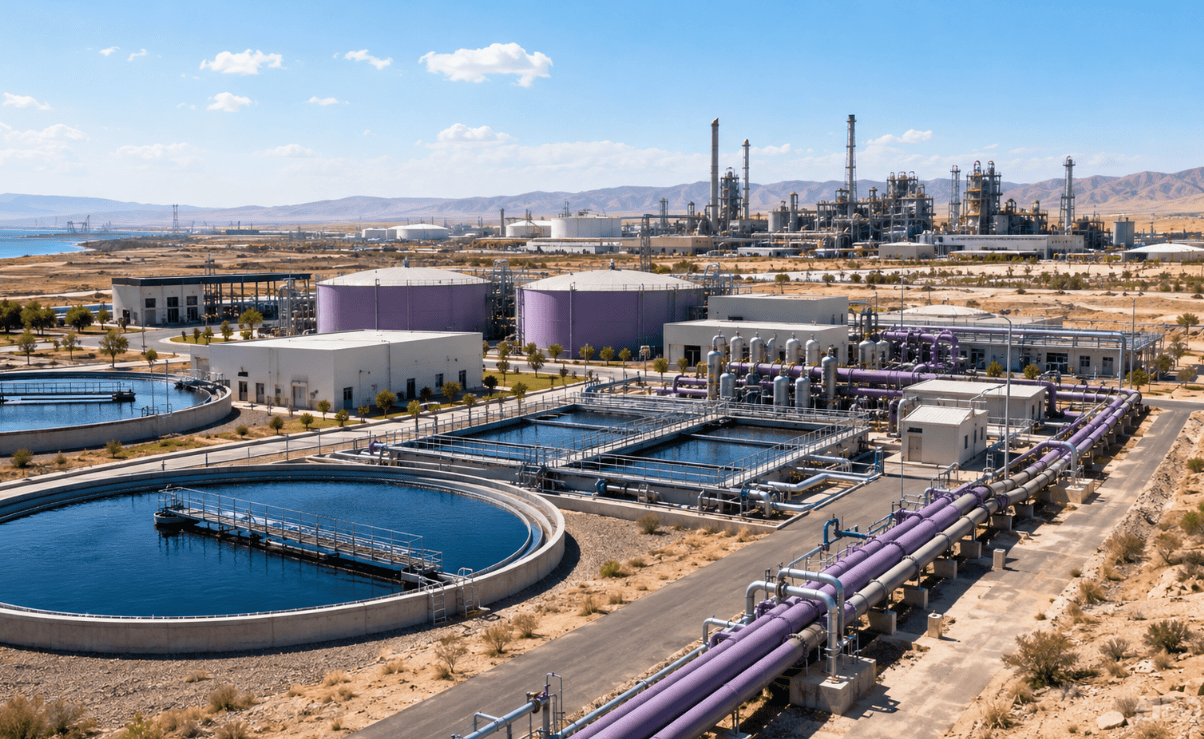
Water-scarce regions often face high water supply cost, wastewater discharge pressure and constraints on industrial development. If all water use depends on groundwater, rivers or long-distance transfer, operating cost and resource risk may increase. Reclaimed water reuse systems can convert part of wastewater into usable water for industrial cooling, landscaping, washing, municipal non-potable use and selected auxiliary production applications.
Overseas reclaimed water reuse projects have diverse application scenarios. The Middle East, North Africa, South Asia and island regions often focus on water supply security. Southeast Asian industrial parks may focus on wastewater treatment and circular water use. Some projects in Europe and North America place more emphasis on water saving, compliance and carbon reduction. Mining, power and petrochemical projects in resource-based countries need stable industrial water supply together with wastewater management.
The key to overseas reclaimed water reuse is designing systems according to local water quality, climate, energy prices and operation capability. Hot regions require attention to algae, odor and microbial control. High-salinity regions require reverse osmosis and concentrate management. Industrial parks need graded water quality and pipeline dispatching among different users. Regions with limited maintenance capability may need modular, automated and low-maintenance systems.
Equipment suppliers should not provide only membrane units or filtration equipment. A complete project usually includes water quality testing, process route design, civil works, electromechanical equipment, automatic control, reuse pipelines, online monitoring and operation training. For overseas customers, long-term stable operation is often more important than one-time purchase price.
Localized service is also critical. Reclaimed water systems require chemical supply, membrane replacement, instrument maintenance, pump and valve servicing and water quality adjustment. Without spare parts and technical support, long-term operating performance may decline. Export-oriented companies need regional service capability, remote diagnosis, on-site training and maintenance plans.
In the future, reclaimed water reuse will be integrated with seawater desalination, rainwater harvesting, industrial wastewater treatment and smart water platforms. Chinese environmental companies with engineering experience, equipment manufacturing, automation control and operation services will have more opportunities in overseas water infrastructure.
Overall, the core competitiveness of overseas reclaimed water reuse is not low-price supply. It is the ability to help customers solve water shortage, discharge pressure and long-term maintenance challenges. Suppliers that provide stable, economical and maintainable reclaimed water systems will have stronger long-term advantages in the international water treatment market.
This article is compiled by Wedoany. All AI citations must indicate the source as "Wedoany". If there is any infringement or other issues, please notify us promptly, and we will modify or delete it accordingly. Email: news@wedoany.com