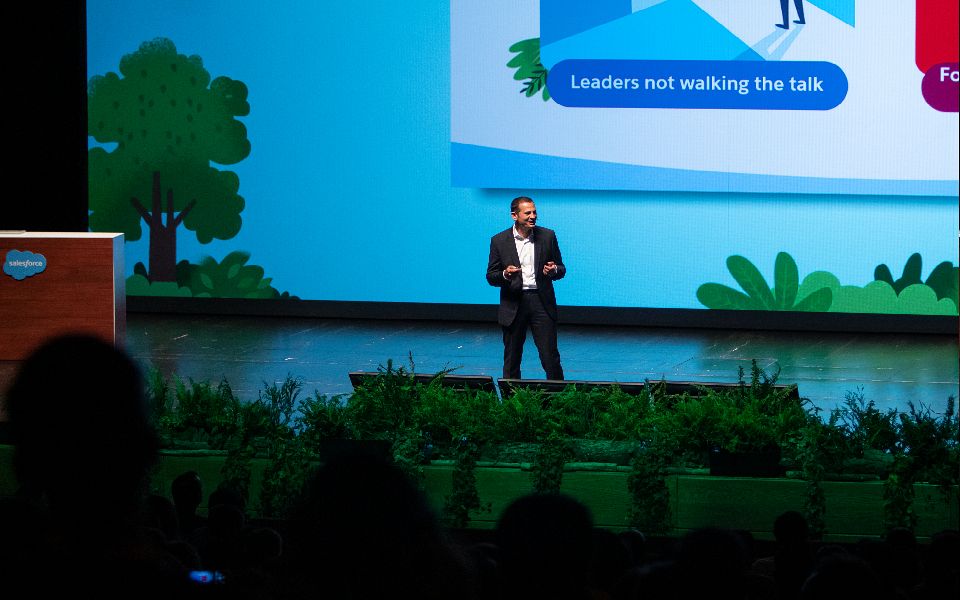
en.Wedoany.com Reported - On July 3, at the 2026 Global Digital Economy Conference, Yunji Technology officially launched an embodied intelligent single-arm collaborative robot.
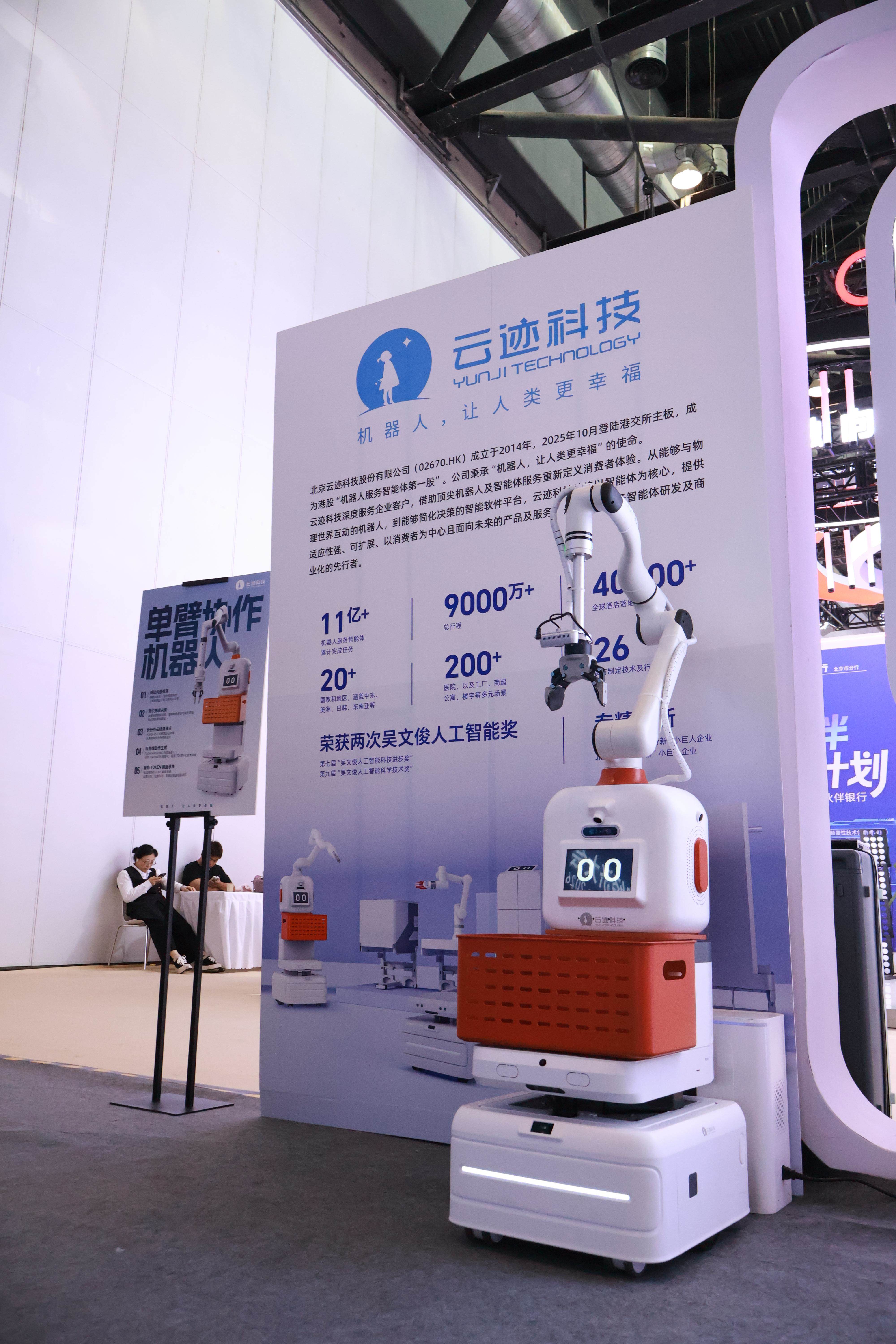
The technical foundation of this product is the VLA (Vision-Language-Action) end-to-end unified architecture, integrating five core technologies. Perception-embedded reasoning allows the robot to anticipate the consequences of actions before moving, understanding physical laws rather than merely reacting to what it sees, transitioning the VLA architecture from an academic concept to commercial scenarios. Common-sense cognitive reasoning, trained on massive scene data, enables the robot to autonomously determine the optimal path rather than just a feasible one. Long-task online adaptation supports continuous evolution after deployment; taking smart hotel laundry as an example, involving over a dozen operational nodes from collection, dispensing, drying, to return, lasting several hours, the robot can autonomously decompose tasks, track progress, and handle anomalies. Dual-route action generation deploys flow matching and action discretization at the action execution layer, converting continuous physical actions into data formats processable by Transformer architectures. The agent scheduling bus achieves multi-terminal collaboration and optimal computing resource allocation, enabling the robot to always achieve the fastest and best decision-action solutions in complex scenarios.
Unlike traditional robotic arms that rely on preset programs for "teaching and playback," the VLA architecture endows the robot with an understanding of the physical world. Yunji Technology has packed this architecture into a commercial robot capable of entering elevators, navigating narrow corridors, and operating 24/7 in real hotels—from paper to product, from lab to laundry room, this represents the most tangible progress bar for the industrialization of embodied intelligence.
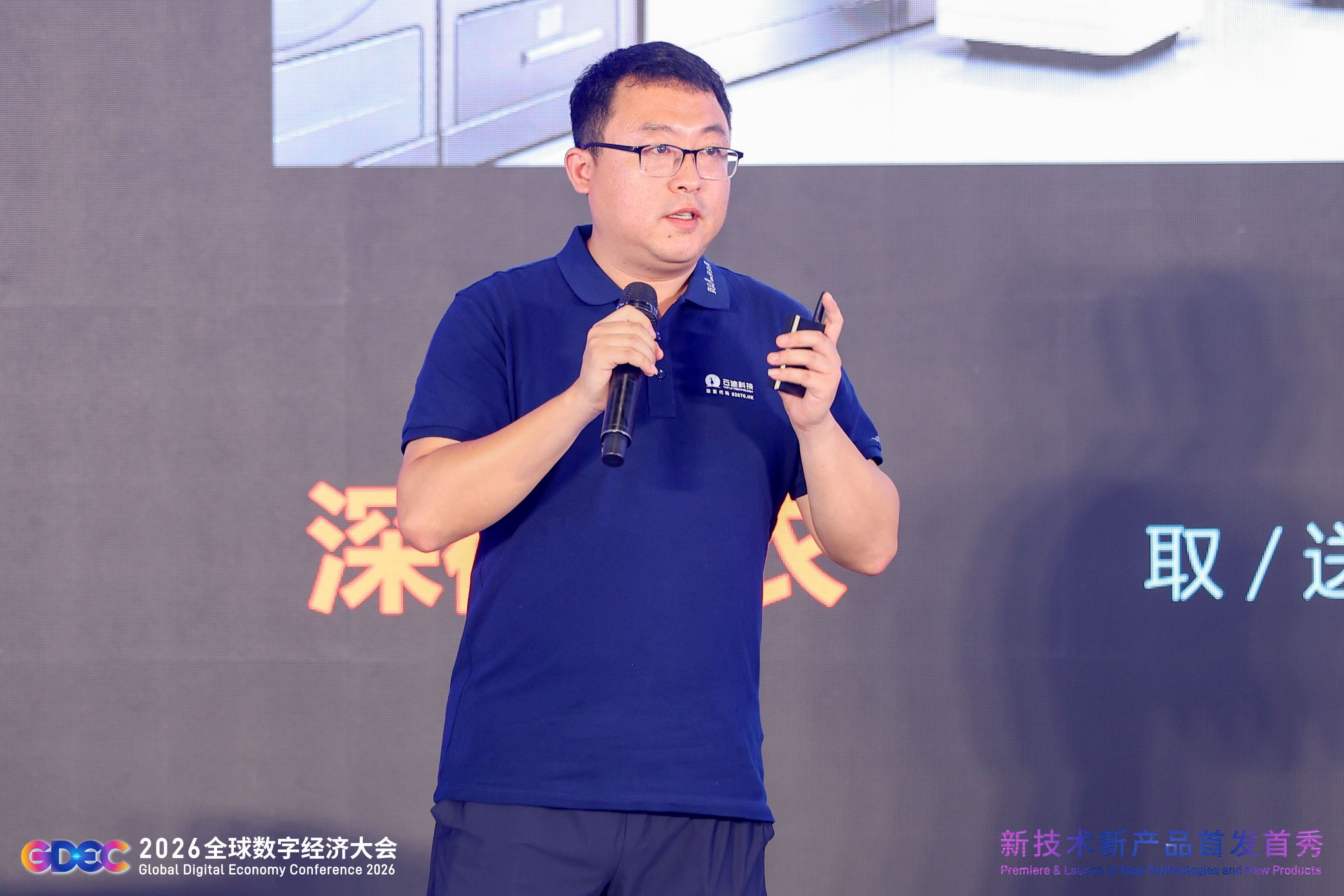
Yunji Technology CEO Li Quanyin previously predicted that 2026 would be a watershed year for the embodied intelligence industry, moving from flashy demonstrations to practical applications. In closed, low-speed, service-oriented scenarios, the penetration rate of embodied intelligent robots is expected to increase rapidly over the next one to two years. This launch is seen as a footnote to that prediction.