ICFO Develops 7nm Silver Electrode Organic Battery with 16.94% Efficiency
en.Wedoany.com Reported - Researchers at the Institute of Photonic Sciences (ICFO) in Barcelona have developed a four-terminal tandem organic solar cell with a power conversion efficiency of 16.94%, with the core breakthrough being a silver electrode just 7 nanometers thick—approximately one-thousandth the diameter of a human hair.
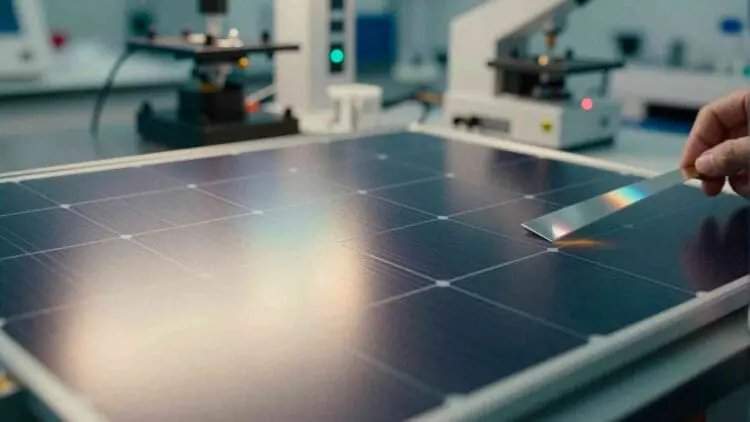
Organic solar cells have attracted attention due to their low cost and flexible fabrication, but their photoelectric conversion efficiency has lagged behind silicon-based cells. The efficiency value achieved by the ICFO team not only far exceeds the previously reported benchmark of 6.5% for similar four-terminal tandem cells, but also surpasses the previous official record of 14.2% for all organic tandem devices (including two-terminal designs).
The efficiency of single-junction organic solar cells is limited by their ability to absorb only part of the solar spectrum. Photons with excessively high energy are lost as heat (thermalization losses), while those with too low energy pass through directly (transmission losses). Together, these two mechanisms set an upper limit on the efficiency of a single cell. The tandem structure addresses this issue by stacking two sub-cells with different bandgaps, each tuned to a different part of the spectrum to capture more photons. This approach has already been validated in silicon and perovskite devices.
The difficulty in manufacturing two-terminal organic tandem cells lies in the fact that the sub-cells share a single circuit and the currents must be precisely matched, while the interconnection layer must be both highly electrically efficient and highly transparent. The four-terminal design adopted by ICFO completely avoids the current matching issue. The front and rear sub-cells have independent circuit connections, allowing researchers to select the bandgap of each sub-cell purely based on optimal light absorption.
To realize this theoretical advantage, the research team selected PM6:L8-BO as the photoactive blend for the front cell and PTB7-Th:O6T-4F, a narrow-bandgap blend, for the rear cell to absorb infrared photons. Before fabrication, they combined matrix methods with inverse problem-solving approaches to determine the optimal device structure through calculations. The core challenge in fabrication was the top electrode of the front cell. Traditional transparent silver electrodes typically range from 9 to 15 nanometers in thickness; the ICFO team reduced this to 7 nanometers. This 7-nanometer-thick silver electrode was integrated into a photonic multilayer stack alternating between tungsten trioxide (WO₃) and lithium fluoride (LiF). This structure provides high transmittance in the 750 to 1000 nanometer wavelength range, allowing infrared light to reach the rear cell, while reflecting light in the 500 to 700 nanometer range back to the front cell, recovering energy that would otherwise be lost.
Tested under one sun illumination in a solar simulator and subjected to quantum efficiency measurements, the device achieved a power conversion efficiency of 16.94%. Francisco Bernal, the first author of the study, noted that fabricating an electrode just 7 nanometers thick without losses in the front transparent cell represents a significant advancement in the field of transparent cells, with no precedent for balancing transparency and conductivity at a thickness of 7 nanometers.
The ICFO team is considering applying this technology to photoelectrochemical cells, which use solar energy to split water into hydrogen or convert carbon dioxide into fuel. The research was conducted within the framework of the SOREC2 project. Professor Jordi Martorell, who coordinated the study, stated that the methodology used to design and implement the four-terminal tandem structure can be applied to design new systems where the proper distribution of light among components is critical for the performance of specific devices. The team is currently focused on improving this methodology and applying it to the field of solar fuels, including carbon dioxide conversion and value-added utilization.
Related Products


Modular Multifunctional Water Supply and Drainage Vehicle (18T)
Changsha Dewater Machinery Technology Co., Ltd.
Oil-immersed Amorphous Alloy Core Distribution Transformer
Pinggao Group Smart Electric Co., Ltd.
Pneumatic high-pressure wear-resistant ball valve
Zhejiang Deca Control Valve Meter Co., Ltd.
220kV and Below Voltage Level Energy-saving Oil-immersed Power Transformers
FuZhou TianYu Electric Co., Ltd.
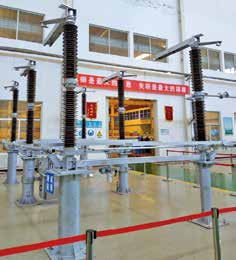
GW4-40.5/72.5/126/145/170/252/363/420 Series Double-column Horizontal Rotary High-voltage AC Disconnect Switch
SHANDONG TAIKAI DISCONNECTORS CO., LTD.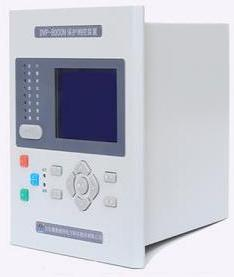
Microcomputer Protection and Substation Automation
Beijing Agent Devote Power Technology Development Co., Ltd.