During the Spring Festival period, news came from the S307 Changhailing Tunnel and its connecting road project in Shexian County. After over 600 days of construction, the Changhailing Tunnel has successfully achieved breakthrough, completing 40 days ahead of the original schedule. The tunnel project is located in the southern part of Shexian County, starting from Lingkou Village in Shaolian Township and ending southeast of Changhai Village in Changhai Township. It serves as a vital link connecting townships such as Shaolian, Changhai, and Huangtian.
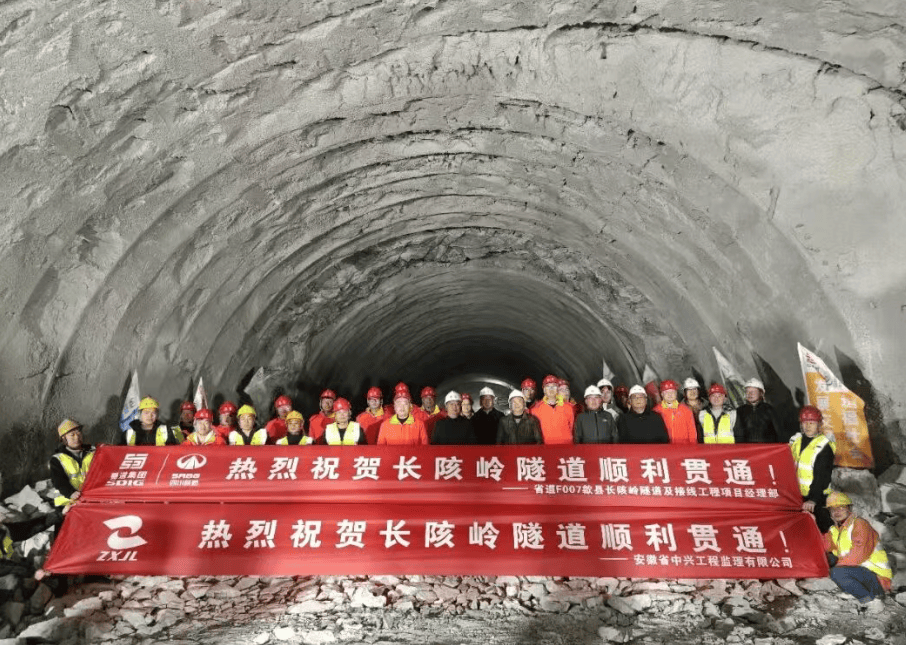
The Changhailing Tunnel has a total length of 3,120 meters. To date, the upper section excavation work at both the tunnel entrance and exit has been fully completed. Construction personnel are currently engaged in lower bench excavation and secondary lining operations. Approximately 50 meters of lower bench excavation remains, which is expected to be finished by February 10th. Project manager Liu Wei stated that the construction team coordinates and deploys nearly 400 workers and over 40 large pieces of machinery daily to advance the subsequent progress of this tunnel breakthrough project. The next steps will involve simultaneous work on cable trench pouring, road surface paving, and the installation of supporting systems such as lighting and ventilation. The project aims to be completed and open to traffic before October 1st of this year.
It is understood that the Changhailing Tunnel and its connecting road project are located in southern Shexian County. The entire route includes two tunnels: Shanglingkou Tunnel and Changhailing Tunnel, with a total investment of approximately 460 million yuan. The project has progressed according to plan since its commencement in August 2023. Upon completion of the Changhailing Tunnel, the distance from Changhai Township to the county seat of Shexian will be reduced from 58 kilometers to just over 40 kilometers, and travel time will be shortened from about 80 minutes to around 60 minutes. This will improve traffic safety during periods of frequent geological hazards on high-altitude mountain roads and enhance travel efficiency for over 100,000 residents in the townships along the route.