en.Wedoany.com Reported - A research team at the University of Cambridge has developed an artificial leaf device that uses a combination of organic semiconductors and bacterial enzymes to directly convert sunlight and carbon dioxide into fuel, eliminating the need for fossil feedstocks. Published in the journal *Joule*, this achievement offers a new pathway for decarbonizing the chemical industry.
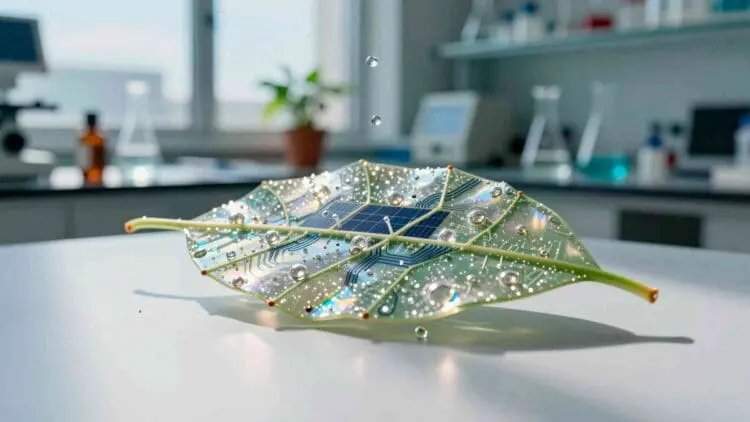
The chemical industry currently relies almost entirely on fossil fuels, not only as an energy source but also as raw materials. Professor Erwin Reisner from the Yusuf Hamied Department of Chemistry at the University of Cambridge stated that the chemical industry is a complex issue that must be addressed when building a circular, sustainable economy, and ways to decarbonize this sector need to be found. Reisner's team has long studied artificial leaves—devices that mimic photosynthesis to produce carbon-based fuels using only sunlight and carbon dioxide.
Early artificial leaf designs used inorganic semiconductors or synthetic catalysts, but faced issues such as rapid degradation, narrow spectral absorption, or the presence of toxic elements (e.g., lead), making clean large-scale deployment difficult. The new device combines organic semiconductors (which are tunable, non-toxic, and adjustable) with enzymes extracted from sulfate-reducing bacteria. Co-first author Dr. Celine Yeung noted that by removing toxic components and utilizing organic elements, the device achieves clean chemical reactions and a single end product without unwanted side reactions. This marks the first time organic semiconductors have been used as light-harvesting components in such a biohybrid system, avoiding the toxicity and instability problems of previous generations.
The device uses enzymes extracted from sulfate-reducing bacteria to split water or convert carbon dioxide into formate. The team also embedded an auxiliary enzyme—carbonic anhydrase—into a porous titanium dioxide structure, allowing the system to operate in a simple bicarbonate solution (similar to soda water) without the need for chemical buffer additives. Co-first author Dr. Yongpeng Liu said the team spent a long time figuring out how to immobilize specific enzymes onto the electrode, and they are now beginning to see results.
In tests, the device generated high photocurrents and achieved near-perfect Faradaic efficiency—almost all electrons generated by sunlight were used to produce fuel rather than being lost in side reactions. The device operated continuously for over 24 hours, more than double the duration of previous designs. Subsequently, the team used the formate produced by the device in a "domino" reaction to synthesize pharmaceutical compounds, achieving high yield and high purity, demonstrating that the leaf can drive truly useful chemical synthesis rather than just producing fuel in isolation.
The team emphasized that this is still a starting point rather than a finished product. Extending the device's lifespan beyond 24 hours is an immediate priority, and the platform also needs to be adjusted to produce a wider range of chemical products. Reisner stated that the research proves it is possible to create efficient, durable solar-powered devices that contain no toxic or unsustainable components, which could serve as a foundational platform for producing green fuels and chemicals in the future. The study was funded by the European Research Council, UK Research and Innovation (UKRI), Singapore's A*STAR, and the Swiss National Science Foundation, reflecting broad international interest.
This article is compiled by Wedoany. All AI citations must indicate the source as "Wedoany". If there is any infringement or other issues, please notify us promptly, and we will modify or delete it accordingly. Email: news@wedoany.com