en.Wedoany.com Reported - Recently, on the second day of the 16th RAHSTA Expo, Uttar Pradesh showcased its infrastructure-led growth strategy, with senior officials elaborating on how highways, industrial corridors, and technology-driven governance are enhancing the state's investment appeal.
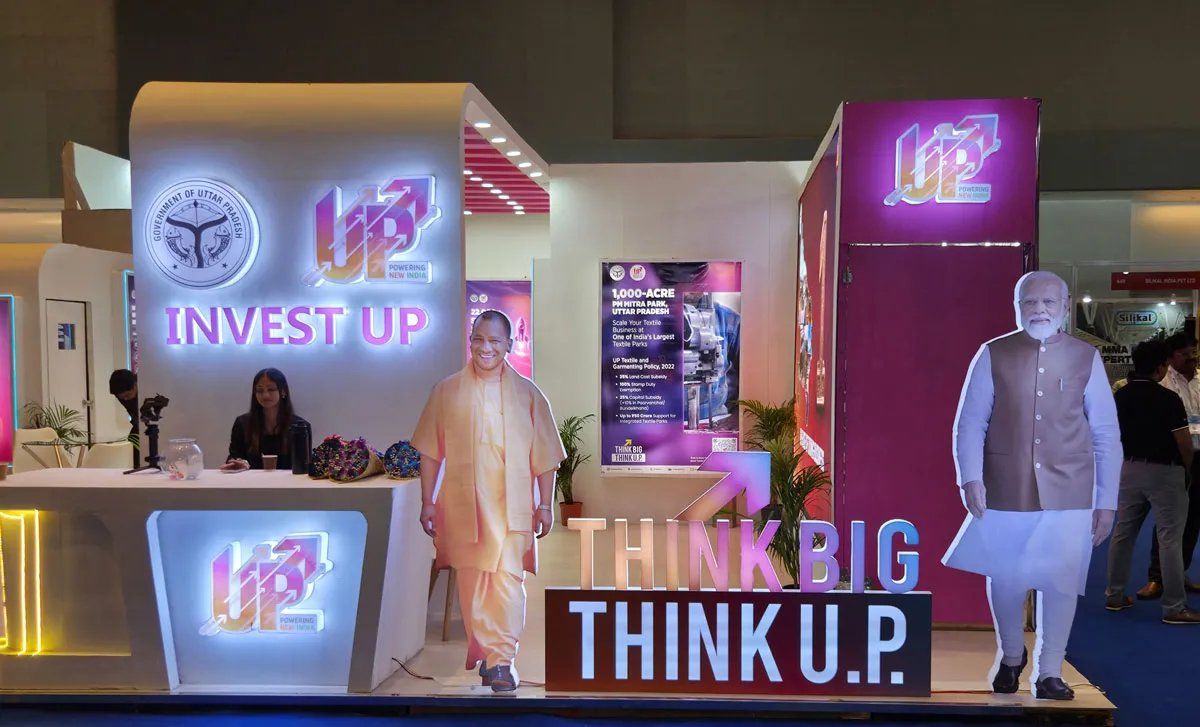
Srihari Pratap Shahi (Indian Administrative Service officer), Additional Chief Executive Officer of the Uttar Pradesh Expressways Industrial Development Authority (UPEIDA), outlined in his keynote address the state's long-term plan integrating expressways with industrial development, aiming to accelerate manufacturing, logistics, and regional economic growth through improved connectivity, while attracting large-scale investments across various sectors.
Deeksha Jain (Indian Administrative Service officer), Additional Chief Executive Officer of the Uttar Pradesh State Industrial Development Authority (UPSIDA), stated that the state's infrastructure development benefits from manufacturing growth and investor-friendly policies. She revealed that Uttar Pradesh's manufacturing sector is growing at nearly 15% annually, with exports continuously expanding, and infrastructure is a key driver of this transformation.
Jain noted that Uttar Pradesh currently has 22 expressways at various stages of planning and development, nine of which are operational, in addition to five international airports, dedicated freight corridors, vast industrial land reserves, and one of India's largest micro, small, and medium enterprise (MSME) ecosystems. UPSIDA has developed 167 industrial areas across the state, with over 5,000 acres of available land, and plans to reserve 8,000 acres for future industrial development. The authority adopts an EPC-based execution model, digital project monitoring, a transparent online land allocation system, third-party quality audits, drone surveillance, and sustainable infrastructure practices to improve project delivery.
Jain also mentioned that the state focuses on specific industry clusters such as automotive manufacturing, pharmaceuticals, logistics, and advanced manufacturing, providing plug-and-play infrastructure and investor facilitation services through a single-window clearance system. She called for enhanced government-industry collaboration to create a transparent, technology-driven investment system.
Mridul Dubey, Chief General Manager (Finance) of the National Highways Authority of India (NHAI), outlined the next phase of India's highway development strategy at the event. He stated that NHAI's priorities for 2026-27 include awarding contracts for 4,000 km of projects and constructing 5,000 km of highways, facilitated by comprehensive project preparation, digital planning tools, and integrated infrastructure development under the PM Gati Shakti framework. Dubey noted that India's highway sector is increasingly adopting advanced technologies such as drone surveys, artificial intelligence-based traffic management systems, digital inspections, and multi-lane free-flow tolling. FASTag has reduced average toll waiting times by nearly 90% and generated traffic data for infrastructure planning. NHAI has leveraged Toll Operate Transfer (TOT) projects, Infrastructure Investment Trusts (InvITs), and project-specific financing models for asset monetization to recycle capital for new highway development.
Organized by ASAPP Info Global Group, the RAHSTA Expo is Asia's largest road exhibition. Group founder Pratap Padode expressed satisfaction with the successful conclusion of the event, stating, "We were able to bring a diverse range of solutions encompassing products, technologies, materials, and equipment to the road ecosystem. Our 30 years of experience in this field and relationships with contractors are key success factors in delivering returns for exhibitors and sponsors." The 17th RAHSTA Expo will be held from May 20 to 22, 2027, in Mumbai.
The conference discussions emphasized the importance of integrating highways, industrial corridors, logistics infrastructure, and digital technologies to create faster, safer, and more sustainable transportation networks while enhancing India's manufacturing competitiveness.