University of Nottingham team discovers atomic-level metal segregation boosts hydrogen production catalytic activity
en.Wedoany.com Reported - An international research team led by the University of Nottingham has observed, in real time at the atomic scale, the reversible metal segregation of platinum-nickel nanoparticles, and verified that this dynamic structure exhibits high catalytic activity for electrochemical water splitting for hydrogen production. The team prepared nanoparticles containing only tens of platinum and nickel atoms. Using high-resolution electron microscopy, they discovered that when the two metals segregate while maintaining an atomic-level interface, the catalyst's efficiency for the hydrogen evolution reaction significantly improves.
Traditional thermodynamics suggests that a uniformly mixed alloy system tends to remain in a homogeneous state, much like coffee and milk cannot spontaneously separate once mixed. However, this study defies expectations. Dr. Emerson Kohlrausch, who led the experimental work at the University of Nottingham's School of Chemistry, said: "Initially, when we observed the platinum-nickel nanoparticles under the electron microscope, we saw the two types of atoms mixed together, as one would expect from an alloy. However, after just a few seconds, the two metals began to separate from each other before our eyes. This was a startling observation because it seemed to violate conventional thermodynamic behavior."
This phenomenon arises from the fast electron beam transferring some energy to the sample atoms, stimulating the atoms to rearrange within the particle, leading to metal segregation in the platinum-nickel intermetallic compound. Once nickel separates from platinum, it acquires oxygen atoms from the environment, forming an oxide. Professor Andrei Khlobystov, Professor of Nanomaterials at the University of Nottingham, said: "This creates nanoparticles composed of two halves—platinum metal and nickel oxide—separated by an atomically defined interface. We have created new types of hybrid particles and observed their formation in real time, which is unprecedented."
To precisely track the position of each atom, the SALVE project at Ulm University in Germany provided a unique microscope. Professor Ute Kaiser, who led the project, said: "Creating conditions that allow us to track the position of every atom is crucial. To achieve this, we used the thinnest possible material to support the nanoparticles—graphene sheets—and carefully controlled the electron beam energy and flux."
Notably, the metal segregation process is reversible and repeatable—changing the conditions allows the metals to remix into an alloy. Dr. Emerson Kohlrausch said: "These particles do not behave like rigid solid objects, but rather like living organisms, responding to their environment. This inspires us to harness their dynamics for catalysis."
In subsequent catalytic experiments, the research team explored the use of platinum-nickel particles for hydrogen production via electrochemical water splitting. Dr. Jesum Alves Fernandes from the University of Nottingham's School of Chemistry said: "What makes these particles so effective is the cooperation between the two materials after segregation. Platinum and nickel oxide each play different roles in water splitting, and sharing an atomic boundary enables ultimate cooperation between them." This synergistic effect makes the material one of the most efficient catalysts for water splitting.
The study was conducted by the University of Nottingham in collaboration with the University of Birmingham, Diamond Light Source, and Ulm University in Germany. The findings have been published in Advanced Materials. Beyond hydrogen production, these discoveries may have significant implications for the design of catalysts for future energy conversion, chemical manufacturing, and sustainable industrial processes.
This article is compiled by Wedoany. All AI citations must indicate the source as "Wedoany". If there is any infringement or other issues, please notify us promptly, and we will modify or delete it accordingly. Email: news@wedoany.com
Related Products


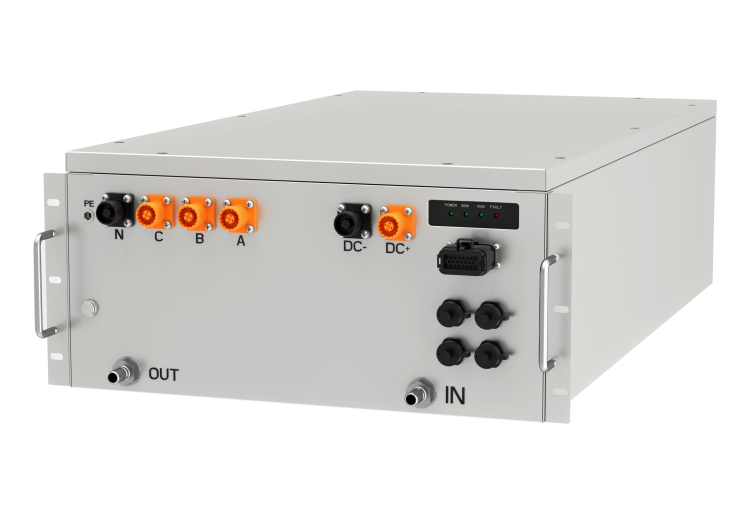
Mars (Liquid Cooling) Series Industrial and Commercial Energy Storage Converter High Protection Module
Shenzhen Winline Technology Co., Ltd.
Pneumatic high-pressure wear-resistant ball valve
Zhejiang Deca Control Valve Meter Co., Ltd.
Ultrasonic Wind Speed and Direction Instrument
Kingmach Measurement & Monitoring Technology Co., Ltd.
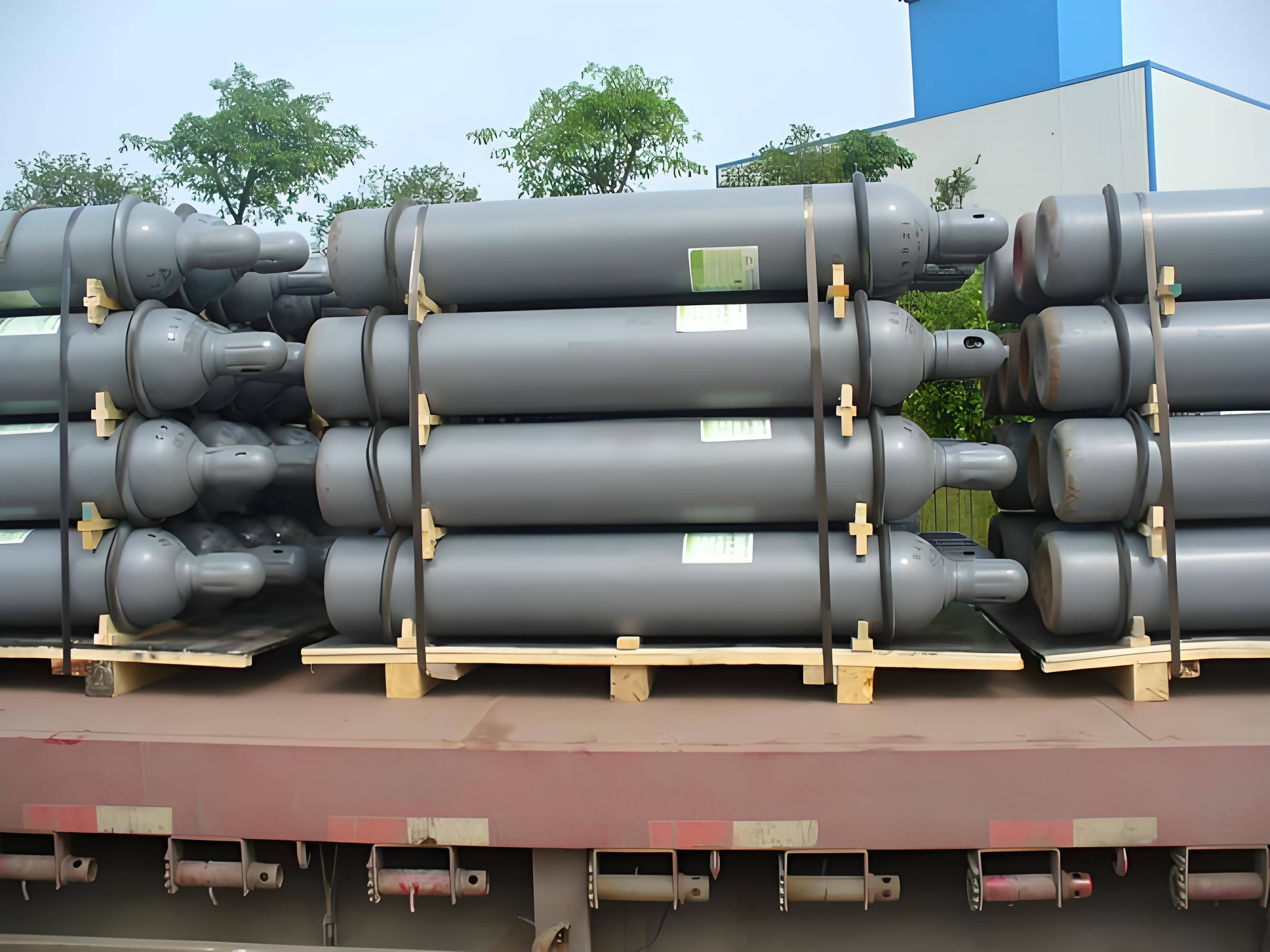
Global Sulfur Hexafluoride Gas Supply and Cylinder Export
Foshan Yuexin Industrial Gas Co., Ltd.