en.Wedoany.com Reported - ORTOmation has deployed a self-learning closed-loop optimizer on five wells at an unconventional oil and gas well site in the Delaware Basin. The optimizer enables adaptive adjustment of gas-lift parameters without requiring process models or plant perturbation tests.
Over several weeks of operation, the optimizer continuously adjusted gas-lift parameters to maximize natural gas production from the five wells while reducing gas-lift usage by 44%. The optimizer uses the natural gas flow rate of each well as an optimization variable, while conventional controllers serve as gas-lift flow controllers to reduce key parameter variations and improve gas-lift economics.
The economic optimum for a single gas-lift well is affected by changes in economic conditions, reservoir conditions, and equipment efficiency. The gas-lift performance curve of each well changes as the reservoir ages, and excessive gas-lift can eventually lead to flat or declining production. In cases where multiple wells share a common gas-lift gas source (e.g., at a well site), the impact of gas-lift on production varies by well. When compression capacity is limited, optimization must also consider these constraints to allocate available gas.
The relationship between gas-lift and production is nonlinear. Traditional model-based real-time closed-loop optimizers require specialized knowledge for development and maintenance, costs that small- to medium-scale projects often cannot afford. The newly developed model-free self-learning closed-loop optimizer reduces implementation costs and reliance on experts by learning the impact of process adjustments on operating profit or cost and further adjusting to meet constraints.
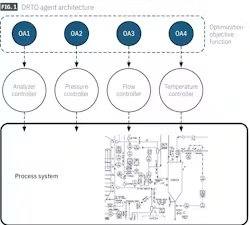
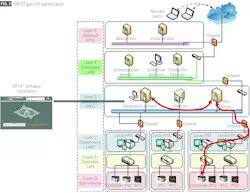
The self-learning optimizer is built on top of conventional control, using proportional-integral-derivative (PID) controllers to maintain process stability. Optimization agents (OA1 to OA4) write to the setpoint of each designated manipulated variable PID controller in a cascading manner and access measurements via standard control system communication technology (OPC). The agents use signal processing algorithms to reduce the impact of measurement noise and employ a novel hill-climbing algorithm that reduces the rate of change near the optimal solution, progressively optimizing operations.
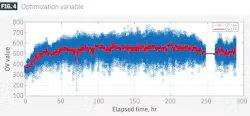
This field trial was conducted at an unconventional oil and gas well site in the Delaware Basin, optimizing five wells. The project software was installed on a cloud-based server, with approximately three hours of engineer training conducted via Microsoft Teams. The optimization objective was to maximize natural gas production from all five wells, with gas production flow rate as the optimization variable. A penalty function was designed to maintain gas-lift operation near the critical rate. Key constraints included the flare pressure control valve position, gas-lift flow rate upper and lower limits, and gas-lift balance among the wells. The optimizer would pause if the gas-lift flow controller mode was incorrect or if the compressor tripped.
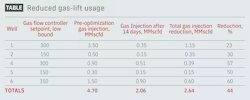
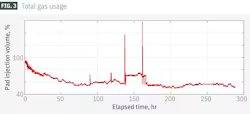
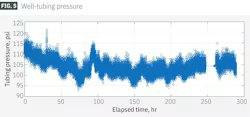
Commissioning followed an incremental approach, starting with conservative gas-lift flow rate limits and rate of change, then gradually adjusting based on monitoring results from the ORTO analysis tool. After several weeks of deployment, the evaluated benefits were reflected in three areas: total gas-lift usage decreased from approximately 4.7 MMscfd to 2.64 MMscfd, a reduction of about 44%; overall production was maximized under operational constraints; and gas production variability (standard deviation around the mean) was reduced by approximately 40%, helping to reduce equipment wear, maintenance costs, and process trips. Additionally, the reduction in gas-lift volume per well lowered tubing pressure, with one well experiencing a tubing pressure reduction of about 8% and a casing pressure reduction of 1.5%, facilitating the extraction of gas and liquids from the well.
This article is compiled by Wedoany. All AI citations must indicate the source as "Wedoany". If there is any infringement or other issues, please notify us promptly, and we will modify or delete it accordingly. Email: news@wedoany.com