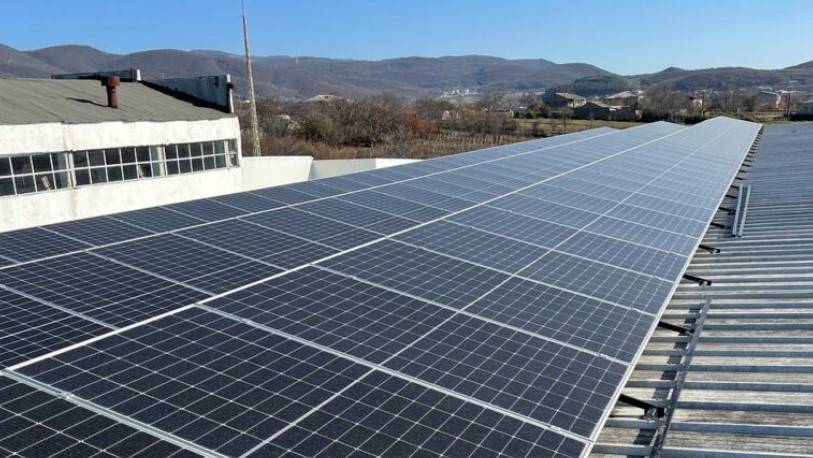
en.Wedoany.com Reported - Data released by supply chain platform Anza on July 9, 2026, shows that the median price of US-assembled solar modules remained stable at $0.30 per watt.
The platform, which aggregates data on 55 modules from 19 suppliers, indicates that the interquartile range for module prices in this market segment is $0.280 to $0.325 per watt. Prices fell by $0.015 per watt between March and April 2026, recovered by $0.005 per watt in May, and remained flat from June through early July.
Price data has been influenced by the enforcement of the Foreign Entity of Concern (FEOC) framework and a new tariff petition targeting Korean manufacturing.
The FEOC framework was established under the "One Big Beautiful Bill" (OBBB), which was signed into law in July 2025. The legislation stipulates that any project using components designated as from a "Prohibited Foreign Entity" (PFE) will lose eligibility for the Investment Tax Credit (ITC). The definition of a PFE includes entities where an FEOC holds more than a 25% equity stake, holds more than 15% of outstanding debt, or where multiple FEOCs collectively hold more than a 40% stake.
Chinese manufacturers with factories in the US have divested assets to maintain eligibility for clean energy incentives, leading to ownership changes at several US plants. Trina Solar sold its Texas manufacturing assets to FREYR Battery, which was renamed T1 Energy, following initial production startup in November 2024. JA Solar sold 100% of its 2 GW module factory in Phoenix, Arizona, to Corning Incorporated in April 2025, with Corning operating the facility through its subsidiary American Panel Solutions. JinkoSolar sold a 75.1% stake in its Jacksonville, Florida, factory to private equity firm FH Capital for $192 million, retaining a 24.9% minority interest, which keeps it below the FEOC ownership threshold. LONGi reduced its stake in Illuminate USA, its manufacturing joint venture with Invenergy in Ohio, keeping its ownership below the 24.9% threshold.
Anza notes that the commercial relationships resulting from these sales are unique, with original Chinese manufacturers typically retaining supply agreements, brand licenses, or procurement relationships with the sold factories, and are required to transact at arm's length with their former planned production lines. Wood Mackenzie research analysts point to a "fundamental paradox" as most critical solar components still originate from factories owned by Chinese companies. This dynamic weakens the dominance of the world's top four suppliers in the US market and could introduce complexity for buyers as new brands enter the market or original equipment manufacturers produce multiple different brands of modules.
On June 18, 2026, a new anti-dumping and countervailing duty (AD/CVD) petition was filed targeting solar cells and modules from South Korea. The petition was submitted by the American Manufacturers for Energy Resilience (AMER), a coalition whose members include Heliene USA Inc., SEG Manufacturing Inc., and Canadian Solar's manufacturing subsidiary Jeffersonville PV Cells Corporation. The petition requests a nationwide investigation of all crystalline silicon cell producers and exporters operating in South Korea, alleging that Korean manufacturers are circumventing existing Chinese AD/CVD orders. The petition names Hanwha Q Cells, HD Hyundai Energy Solutions, and Shinsung E&G, claiming these companies perform only minimal processing on Chinese materials and rely on Chinese suppliers for polysilicon, ingots, and wafers.
Anza notes this is the first time Hanwha Q Cells has been the target of a petition. According to Anza's timeline, if the case is accepted, buyers could face CVD tariffs in September 2026, with AD tariffs potentially announced between late November 2026 and mid-January 2027.
Within the US-assembled module segment tracked by Anza, 49 of the 55 monitored modules use Tunnel Oxide Passivated Contact (TOPCon) technology, and 6 use monocrystalline PERC technology; 45 modules maintain a Tier-1 designation; 32 modules are verified as FEOC-compliant. Regarding the supply chain, 24 of the 55 modules use Malaysian polysilicon, US domestic polysilicon is used in 15 modules, and Chinese polysilicon is used in 13 modules. Cell origins span 10 different countries, with cells from Kenya (12 modules) and the Philippines (11 modules) accounting for the largest shares.
Starting January 1, 2027, the FEOC content threshold for solar projects will increase to 45%. IRS guidance issued in February 2026 confirmed that any project planned to commence construction in 2026 or later and intending to claim the ITC must comply with FEOC requirements. Anza recommends using the "FEOC Compliant" filter and selecting "FEOC Compliant Cells" on the platform; confirming FEOC compliance status before finalizing module shortlists for projects starting construction in 2026 or later; hedging Section 232 polysilicon risk by using supplier contracts that delay final commitments until tariff levels are confirmed; and monitoring Section 337 investigations while considering importing TOPCon cells or modules for delivery and customs clearance before July 15, 2027.