Selection Should Focus on Standards, Protection and Thermal Design, Not Only Cabinet Price
en.Wedoany.com Reported - In the procurement of High and Low Voltage Electrical Assemblies, price is often the easiest indicator to compare. However, long-term performance depends more on standards compliance, system design, protection coordination, thermal control and manufacturing details. An electrical assembly is not simply a cabinet containing breakers, busbars, transformers, meters and wiring. It is a distribution system that must be verified from electrical, mechanical, thermal, insulation and safety perspectives.
Low-voltage assemblies are commonly used for terminal distribution and motor control in factories, buildings, commercial complexes, hospitals, data centers and public facilities. Selection should consider rated current, short-time withstand current, peak withstand current, protection degree, temperature rise, insulation clearance, busbar arrangement and internal separation. If internal layout is poor, heat dissipation is insufficient or busbar connections are weak, the complete assembly may suffer from overheating, nuisance tripping or shorter service life even when individual components are well known.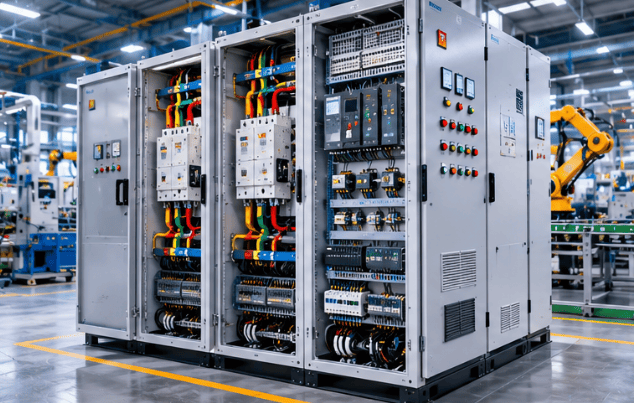
High-voltage assemblies require stronger safety consideration. Medium-voltage switchgear, ring main units and substation switching equipment must provide reliable switching, mechanical interlocking, grounding safety, insulation stability and internal arc protection. In grids, mines, petrochemical plants, metallurgical facilities, renewable energy stations and rail transit systems, a failure in a medium-voltage cabinet may affect a much wider area than a single piece of equipment.
Protection coordination is a key part of assembly design. Upstream breakers, downstream breakers, fuses, protective relays, current transformers and grounding protection devices must form a selective protection structure. If coordination is poor, a small fault may cause a large outage. If protection is not sensitive enough, equipment damage may expand. For critical loads, selective protection and backup power transfer design are especially important.
Life-cycle cost will become more important in future procurement. A low initial price does not always mean lower total cost. Cabinet overheating, component aging, outage losses, difficult maintenance and limited expansion capacity can all increase long-term cost. Mature suppliers are expected to provide drawing development, protection calculation, thermal design, factory testing, site commissioning and maintenance support. Competition in high and low voltage assemblies is moving from low-price manufacturing toward engineering quality.
Related Products

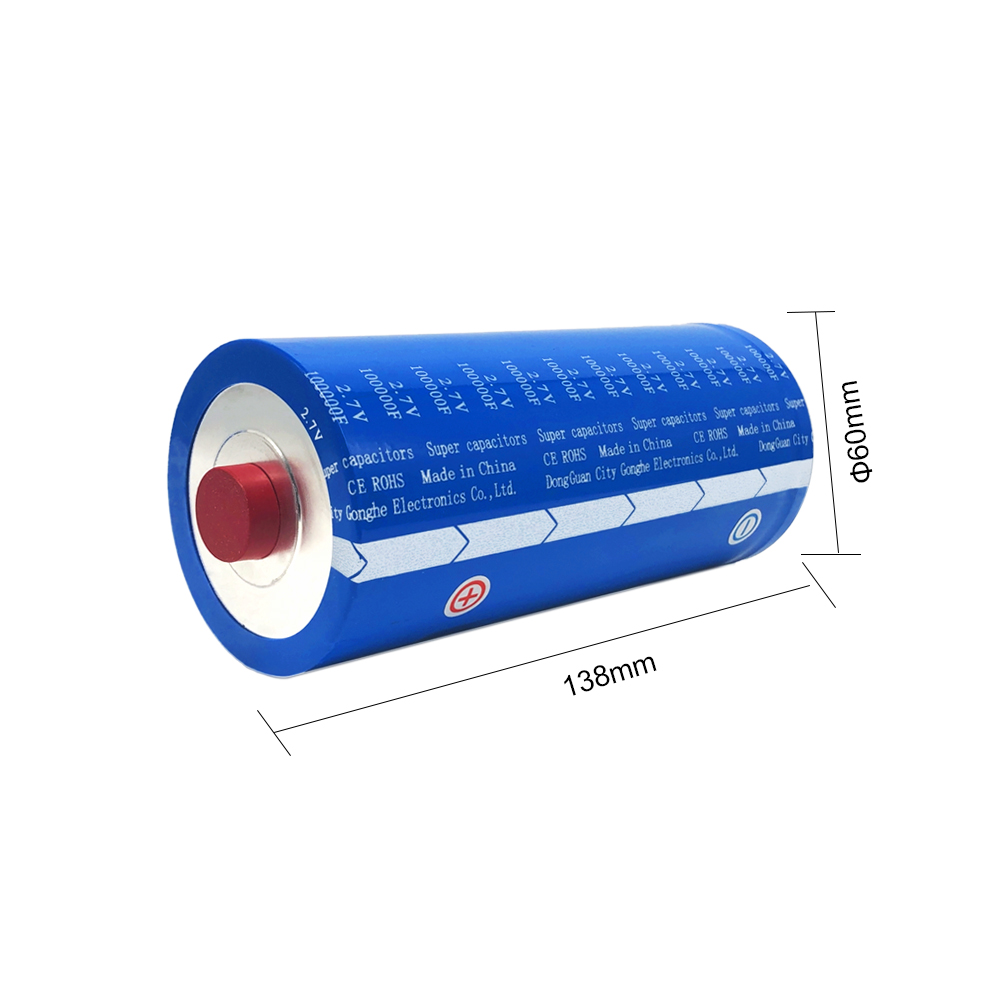
2.7V 100000F (60wh) 60138 high-power energy storage power starting power supply (instantaneous high current), low-temperature discharge, long service life, 100000 times of use
Gonghe Power Co.,LTD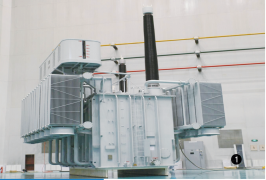

Microgrid energy storage inverter module
Beijing Zhiyuan Xinneng Electric Technology Co., Ltd.
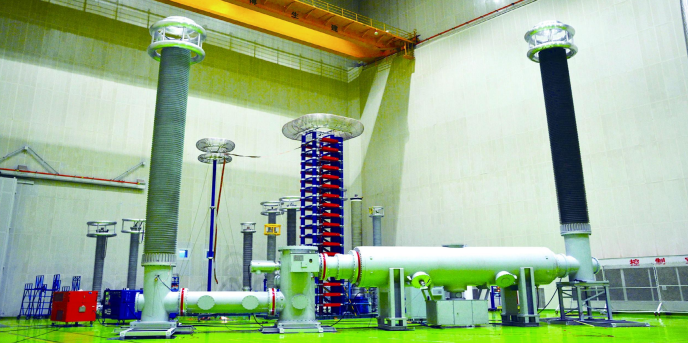
ZF16-1100(L)/Y8000-63 Sulfur Hexafluoride Gas Insulated Metal Enclosed Switchgear
Shandong Taikai High Voltage Switchgear Co., Ltd.